Disclosure: This article is for general educational purposes and is not medical or dental advice. Some links are affiliate links, meaning we may earn a small commission at no extra cost to you if you choose to make a purchase. We only point readers toward things we genuinely believe can help.

A bad taste in mouth that won’t go away usually starts with bacteria on your tongue and along your gumline, not with something serious. Dry mouth, gum inflammation, reflux and some medications can add to it. Here is what your taste is telling you, how to fix it, and when it is worth seeing a doctor.
You brushed. You rinsed. You even chewed a piece of gum.
And ten minutes later it is back: that stale, sour or metallic taste sitting on your tongue like it never left.
It is hard to describe and harder to ignore. It changes how your coffee tastes, makes you second-guess your breath and quietly follows you through the day.
The good news is that a lingering bad taste is very common, and in most cases the cause is in your mouth, where you can actually do something about it.
Bad taste in mouth that won’t go away: what is really going on
Taste and smell are closely linked. According to the Cleveland Clinic, smell makes up about 80% of what you taste, and up to 17% of people in the US experience a distorted sense of taste, called dysgeusia, at some point.
For most people with a constant bad taste, the source is bacteria. When odor-producing bacteria on the back of the tongue and along the gumline break down food, dead cells and proteins, they release sulfur compounds. You smell them as bad breath, and you taste them too.
That is why a bad taste and bad breath so often show up together. They are usually two signals from the same problem.
Other causes, from colds and reflux to medication and pregnancy, are real but less common. We cover each one below so you can rule them in or out.
What your bad taste is telling you
The kind of taste you notice is a useful clue. Most people recognize one of these five.
Stale, rotten or foul
This is the classic bacterial taste. It often comes from a coated tongue, plaque between the teeth or tonsil stones. If your tongue looks white or yellow at the back, our guide to why your tongue is white explains what that coating is.
Sour or acidic
The Cleveland Clinic lists dehydration, mouth breathing, poor oral hygiene, infections, medications and acid reflux among the common causes of a sour taste in your mouth. Reflux usually comes with heartburn, especially after meals or when lying down.
Metallic
A metallic taste often points to bleeding gums, because blood itself tastes metallic. Certain medications, supplements such as iron or zinc, colds and early pregnancy can also cause it, as Healthline explains.
Bitter
Bitterness is often linked to dry mouth, reflux or medication. If it started around the same time as a new prescription, that is worth mentioning to your pharmacist.
Smoking and vaping can leave a bitter, stale taste too, and they dry the mouth out, as we cover in smoking, vaping and bad breath.
Salty
A salty taste is often linked to postnasal drip, when mucus from your sinuses drains down the back of your throat, or to simple dehydration. If you also clear your throat a lot or feel blocked up, read postnasal drip and bad breath.
See What Changes the Bacteria Behind the Taste →
Bad taste in mouth every morning? Here is why
A bad taste in mouth every morning is the most common version of this problem, and it is mostly about saliva. Saliva is your mouth’s natural rinse, and it slows right down while you sleep.
That gives the bacteria on your tongue hours of quiet, undisturbed time. If you breathe through your mouth or snore, your mouth dries out even more, which is covered in mouth breathing at night.
Not sure whether others notice it too? Try a quick private check: lick the back of your wrist, wait ten seconds, then sniff. Our guide on how to tell if you have bad breath covers more tests.
A morning taste that disappears once you brush and clean your tongue is normal. One that lasts until lunch, every day, is a sign the bacterial balance needs work. Our guide to why morning breath is so bad goes deeper.

Sour taste in mouth after brushing teeth
A sour taste in mouth after brushing teeth confuses a lot of people. You just cleaned. Why does it taste worse?
First, brushing usually misses the back of your tongue, which is the number one source of mouth odor. The taste can return within minutes because the source was never touched.
Second, many toothpastes contain a foaming agent called sodium lauryl sulfate, which can change how things taste for a while. It is the same reason orange juice tastes awful right after brushing.
Third, a strong alcohol mouthwash can dry your mouth, and a dry mouth tastes stale fast. And if the sourness comes with frequent heartburn, reflux is worth ruling out, as we explain in can bad breath come from your stomach.
Metallic taste in mouth and bad breath: check your gums
If you notice a metallic taste in mouth and bad breath together, look at your gums first. Gums that bleed when you brush or floss leave small amounts of blood in your mouth, and that tastes metallic.
Bleeding, puffy gums also create pockets where odor-producing bacteria thrive. That is how one problem creates both symptoms at once. Our guide to the early gum disease window explains why this stage is worth catching now.
Medication is the other big suspect. Many common prescriptions change taste or dry the mouth, as listed in medications that cause bad breath. If you are pregnant, a metallic taste is common early on, which we cover in pregnancy and postpartum bad breath.
Support Healthier Gums and Fresher Breath →
Why mints, gum and mouthwash only mask it
Mints and strong mouthwash cover the taste for a little while. Then it comes back, because nothing changed underneath.
Alcohol-based rinses can even make it worse. They dry the mouth and wipe out helpful bacteria along with the harmful ones, so odor-producers often grow back first. We compare both approaches in oral probiotics vs mouthwash.
Heavy mints can also hide whether your routine is working. Give your mouth a few days without them so you can judge the real taste underneath.
To make a bad taste go away and stay away, you need to clean where it starts and change the balance of bacteria that keep producing it.
How to fix bad taste in mouth: a simple daily plan
This is how to fix bad taste in mouth in the order that matters most. Give it two weeks before you judge the results.
Every morning: scrape your tongue
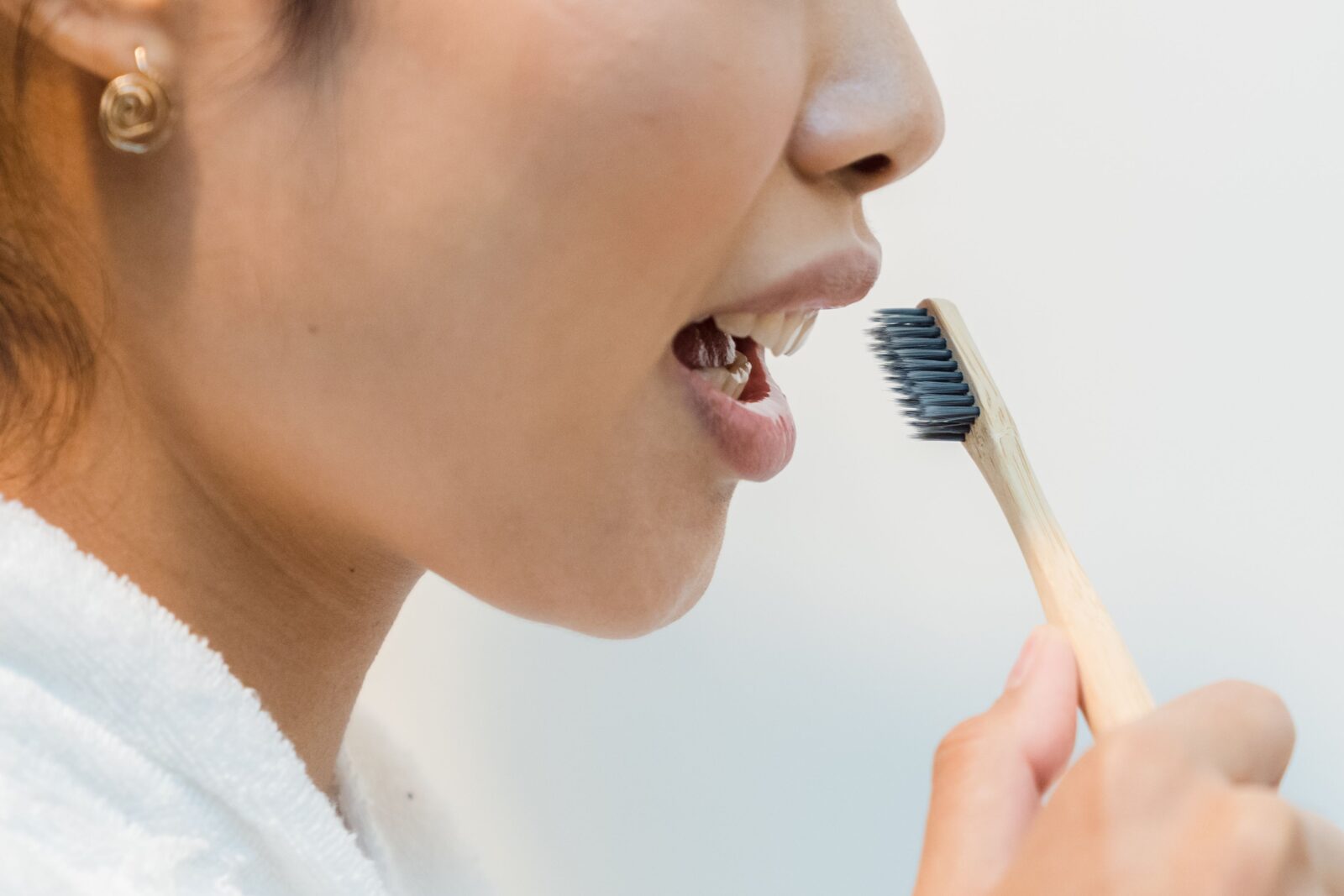
Start as far back as you comfortably can and pull forward gently, 5 to 10 strokes. This removes the coating where most taste-causing bacteria live. Many people notice a difference within days.
Every night: floss and brush
Clean between every tooth before bed, then brush for two full minutes. Plaque left overnight is one of the biggest sources of a foul morning taste.
All day: keep water close
Sip water through the day, especially after coffee. Saliva needs water, and a moist mouth stays fresher for longer.
Swap your rinse
Choose an alcohol-free mouthwash, or try the Cleveland Clinic’s suggestion of rinsing with a little baking soda in water before meals.
Eat for a fresher mouth
Crunchy fruits and vegetables like apples and carrots get you chewing, which boosts saliva. Sugar-free gum after meals helps too. Cut back on sipping sugary drinks all day, because constant sugar feeds the bacteria behind the taste.
Check your medicine cabinet
If the taste started with a new prescription or supplement, ask your pharmacist. Never stop a medication on your own.
Every night: rebuild the balance
After brushing, let an oral probiotic dissolve slowly so the beneficial strains have time on your tongue and gums overnight.
Where an oral probiotic fits
An oral probiotic works on the part brushing and rinsing cannot reach. Instead of trying to kill bacteria, it adds beneficial strains that settle on the tongue, gums and teeth and compete with the odor-producers for space and food.
Over time, that can change what grows back after you clean, so there is less left to taste. It is most useful when the cause is bacterial, which it is for most people.
Three honest points. It must dissolve slowly in the mouth, because a gut capsule passes straight through, as explained in gut probiotics vs oral probiotics. It works over weeks, as set out in how long oral probiotics take to work. And it works alongside your routine and your dentist, never instead of them.
See the Oral Probiotic We Recommend →
When a bad taste needs a doctor or dentist
Most bad tastes improve with the plan above. Book a check if you notice any of these:
- A bad taste that lasts more than two weeks despite good daily care
- Gums that bleed often, look swollen or seem to be pulling back
- White patches in your mouth, which can be oral thrush
- Heartburn or reflux about twice a week for several weeks
- A taste change along with weight loss, fatigue or just feeling off
A sudden metallic taste with swelling, hives or trouble breathing can be a sign of a serious allergic reaction. That needs emergency care right away. If a smell or taste seems unusual, our guide to what different bad breath smells mean explains which ones to raise with a doctor.
Start Your Fresh Taste Routine Today →
You do not have to live with that taste
A bad taste that will not leave can feel like something you just have to put up with. It is not. For most people, it is a fixable bacterial problem hiding in plain sight on the back of the tongue and along the gums.
Clean where it starts, keep your mouth moist and give the beneficial bacteria a reason to move back in. Then enjoy your next cup of coffee the way it is supposed to taste.
Bad taste in mouth: frequently asked questions
Why do I have a bad taste in my mouth that won’t go away?
The most common reason is odor-producing bacteria on the back of the tongue and along the gumline. Dry mouth, gum inflammation, tonsil stones, postnasal drip, acid reflux and some medications can also cause it. If good daily cleaning does not help within about two weeks, see a dentist or doctor.
Why does my mouth taste bad every morning?
Saliva slows down while you sleep, so bacteria on your tongue get hours with very little rinsing. Mouth breathing or snoring dries things out even more. A morning bad taste that clears after brushing and cleaning your tongue is usually normal.
What does a metallic taste in my mouth mean?
A metallic taste can come from bleeding gums, because blood itself tastes metallic. It can also come from certain medications, supplements such as iron or zinc, early pregnancy, colds and sinus infections. If it lasts or has no clear cause, check with a dentist or doctor.
Why does my mouth taste sour after brushing my teeth?
Brushing does not clean the back of your tongue, where most odor-causing bacteria live, so the taste can come straight back. Some toothpaste foaming agents also change how things taste for a while. Frequent sourness, especially with heartburn, can point to acid reflux.
How do I get rid of a bad taste in my mouth fast?
Drink water, scrape the back of your tongue, brush and floss, and rinse with an alcohol-free mouthwash or a little baking soda in water. For a taste that keeps coming back, you need a daily routine that changes the bacteria behind it, not just a quick cover-up.
Can an oral probiotic help with a bad taste in the mouth?
If the taste comes from odor-producing bacteria, an oral probiotic can help by adding beneficial strains that settle on the tongue and gums and compete with them. It works over several weeks and alongside brushing, flossing and tongue cleaning, not instead of them.
Where to go from here
If you are deciding where to spend money first, our breakdown of what to buy for bad breath compares mouthwash, mints, gadgets and probiotics over a full year.
And if you want to see the specific oral probiotic we recommend, the strains that matter for breath and gums, and how to take it, start at our oral probiotic Start Here guide.
Fresh mouth. Clean taste. Every day.