Disclosure: This article is for general educational purposes and is not medical advice. Some links are affiliate links, meaning we may earn a small commission at no extra cost to you if you choose to make a purchase. We only point readers toward things we genuinely believe can help. Loud snoring with gasping or pauses in breathing can indicate obstructive sleep apnoea, which is a medical condition. See a doctor about that rather than treating it at home.
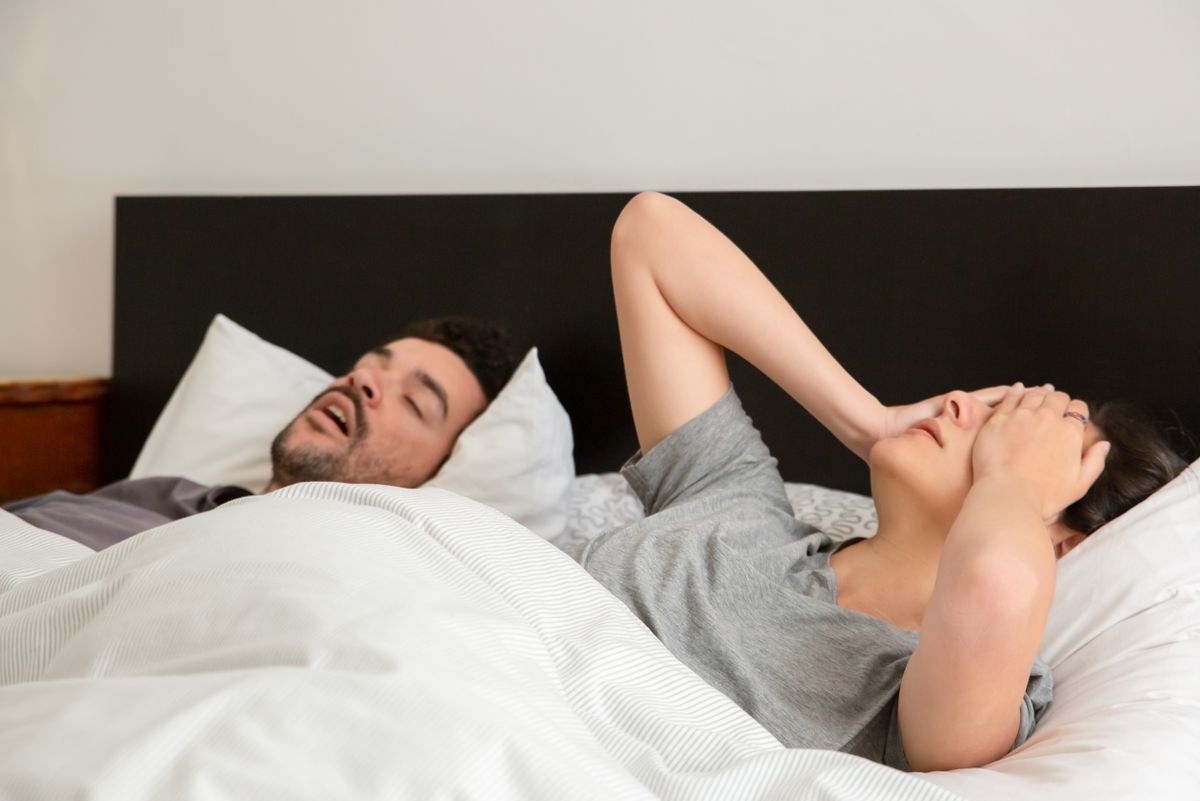
It was supposed to be for one night.
Nobody decides to sleep in separate rooms. It happens one night at a time, and then one day it is just how you live.
Somebody had an early start. Somebody had a cold. It made sense that week, and it made sense the week after, and at some point the spare room stopped being the spare room. Now there is a version of your relationship where you say goodnight in a hallway.
And underneath the snoring that gets talked about, there is a second thing that does not. The mouth that stays open for eight hours produces a specific kind of morning breath, and both of you know it. Nobody says it. You turn away first thing. They get up quickly. The distance that started as a sleep problem has quietly become a closeness problem, and the two are now tangled together so completely that neither of you can remember which came first.
Here is the useful part: the snoring and the breath are usually the same problem. Not two things to fix. One. And the mechanism is simple enough that you can start changing it tonight.
Why snoring makes your breath worse
Snoring is the sound of air forcing its way past soft tissue that has relaxed and narrowed. The overwhelming majority of the time, that means you are breathing through your mouth, because the nose is blocked, restricted, or has simply been bypassed.
The noise is the symptom people complain about. The open mouth is the one that matters for your breath, and it works like this.
Saliva production drops naturally during sleep, to a fraction of daytime levels. That is normal and happens to everyone. But an open mouth adds evaporation on top of an already reduced supply, and air moving across the tongue and palate for hours dries the surfaces to the point where saliva stops doing its job entirely.
That job is bigger than most people realise. Saliva rinses away food debris and dead cells, buffers acid, and crucially, it carries oxygen. The bacteria responsible for the worst-smelling breath are anaerobic, meaning they thrive precisely where oxygen is scarce. Remove saliva for eight uninterrupted hours and you have built the ideal environment for them, then left them alone in it all night with a supply of protein to break down.
By morning they have produced a full night’s worth of volatile sulphur compounds. That is why the smell is at its strongest before you have done anything at all.
See the Oral Probiotic We Recommend
This is not the same as normal morning breath
Everybody wakes up with some degree of stale breath. It is unremarkable, it clears within twenty minutes of brushing and breakfast, and it is not worth a second thought. If that is your situation, the general picture in why morning breath is so bad covers it.
Chronic night-time mouth breathing is a different animal, and it is worth being able to tell them apart.
- You wake with your mouth genuinely dry, not just stale. Tongue stuck to the roof of your mouth, lips tacky, needing water before you can speak comfortably.
- You wake in the night to drink, and keep a glass by the bed as a permanent fixture.
- Your throat is sore or scratchy most mornings, without being ill.
- The smell does not fully clear after brushing. It fades and comes back by mid-morning.
- Your tongue has a coating first thing that a scraper takes several passes to shift, which is the same film described in why your tongue looks white.
- You have been told you snore, or you wake yourself up.
Three or more of those, most nights, is not morning breath. It is a nightly eight-hour drying cycle, and no amount of brushing before bed changes what happens after you fall asleep.
What causes dry mouth from sleeping with mouth open
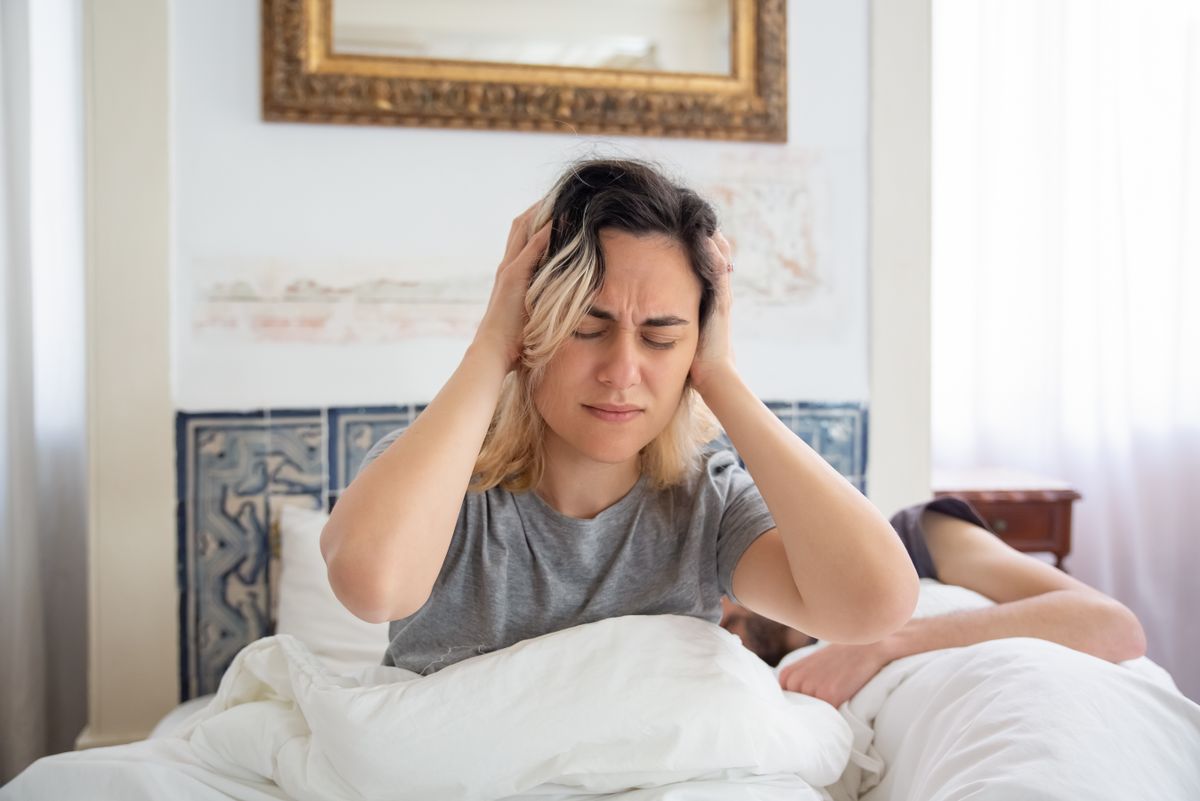
You do not breathe through your mouth by choice. You do it because something has made nose breathing harder, and identifying which thing is what makes this fixable.
A blocked or restricted nose
The most common cause by far. Chronic allergic rhinitis, a deviated septum, enlarged turbinates, nasal polyps, or simple congestion that never fully clears. If you cannot comfortably breathe through your nose with your mouth closed for sixty seconds while sitting still, you will not manage it for eight hours asleep.
Obstructive sleep apnoea
This one matters more than the breath. If you snore loudly and someone has noticed you gasping, choking or stopping breathing, or you wake exhausted no matter how long you slept, that warrants a doctor rather than a home remedy. Untreated sleep apnoea carries real cardiovascular risk, and the mouth breathing is the least of it. Get it assessed.
Alcohol in the evening
Alcohol relaxes the airway muscles, which increases snoring and mouth breathing, and it is dehydrating on top. A drink at 10pm is one of the most reliable ways to guarantee a dry mouth at 6am.
Medication
Hundreds of common drugs reduce saliva as a side effect, and if you take yours at bedtime the trough lands exactly when your saliva is already lowest. Antihistamines, many antidepressants, blood pressure medication and diuretics are frequent culprits, which is covered properly in medications that cause bad breath. Do not stop anything, but do ask your prescriber whether timing can be shifted.
Reflux
Lying flat allows stomach acid into the throat, and it is worse in the second half of the night. It irritates tissue, changes the pH of the mouth, and is one of the few situations where bad breath genuinely does come from your stomach.
CPAP dry mouth and bad breath
If you are already on CPAP, you have done the hard part, and it is worth knowing that dry mouth is the single most common complaint from users rather than a sign the machine is wrong for you. There are four fixes, and most people have not been told about all of them.
Turn on the humidifier and raise it. Most machines have heated humidification built in, and a surprising number of people run them dry or on the lowest setting. If you wake parched, raise the humidity level a step at a time. If you get condensation in the tube, a heated hose or a tube cover solves it.
Deal with mouth leak. With a nasal mask or nasal pillows, air escapes through your mouth if it falls open, which turns the machine into a device that actively dries your mouth all night. A chin strap or a switch to a full face mask stops it. This is the fix that changes things most dramatically for people who have been suffering for years.
Check the mask seal. A leaking mask means higher airflow across your face and a drier mouth. Cushions perish and should be replaced on schedule rather than when they visibly fail.
Clean the equipment properly. This is the one nobody does often enough. The humidifier chamber, tubing and mask cushion are warm, damp surfaces that grow biofilm, and you are breathing through them for eight hours a night. Empty and dry the chamber daily, use fresh distilled water rather than topping up, and wash the mask and tubing weekly. A neglected chamber can make your breath worse on its own.
See What Changes the Bacterial Balance
How to stop mouth breathing while sleeping
The order matters here. Fix the nose first, because everything else is working against a blocked airway otherwise.
Clear the nose before bed
A saline rinse or spray in the evening clears allergens and mucus and is cheap, safe and underused. If congestion is allergic, talk to a pharmacist or doctor about a steroid nasal spray, which works over weeks rather than instantly. Wash bedding hot and weekly if dust mites are your trigger, and keep the bedroom cool rather than warm.
Add moisture to the room
A bedroom humidifier at around 40 to 50 percent relative humidity meaningfully reduces overnight drying, particularly in winter with heating running. This is the single highest-return purchase for most chronic mouth breathers.
Change your position
Sleeping on your back lets the tongue and soft palate fall backwards, narrowing the airway and encouraging the mouth open. Side sleeping helps a great deal. Raising the head of the bed by ten to fifteen centimetres helps both the airway and reflux, and it works better than stacking pillows, which just bends your neck.
Stop drinking three hours before bed
Alcohol timing changes snoring more than most people expect. Moving the last drink earlier, rather than removing it, is usually enough to notice a difference.
About mouth taping
It is everywhere online at the moment, and it deserves a real caution rather than a recommendation. Deliberately sealing your mouth shut is not safe if you have undiagnosed sleep apnoea, because the mouth may be functioning as your backup airway. It is also unwise with significant nasal obstruction, since you cannot force nose breathing that is not physically available. If you snore heavily, get assessed first. Fix the nose first. Anyone selling tape as a solution without mentioning either of those is not being straight with you.
Mouth breathing at night, bad breath, and the layer nothing reaches
Everything above reduces the drying. What none of it changes is which bacteria are sitting in your mouth when the drying happens.
Chronic mouth breathers do not simply have a drier mouth. Over months and years of repeated overnight low-oxygen conditions, the balance of species shifts to favour the anaerobic, odour-producing ones, because that environment selects for them night after night. The population itself adapts to the conditions you have been creating. That is why some people fix the snoring, add the humidifier, and still find the morning smell only partly improves.
Changing the population rather than repeatedly clearing its output is what an oral probiotic is for. Beneficial strains colonise the same surfaces and compete for the same space and nutrients, which shifts the balance rather than temporarily reducing numbers. It is also why an antibacterial rinse before bed tends to disappoint, since it suppresses beneficial species alongside harmful ones and the harmful ones recolonise faster, as set out in oral probiotics vs mouthwash. The underlying mechanism is the same one described in dry mouth and the oral microbiome.
It is slow, and I would rather say so. You are waiting on an ecosystem, not a symptom, and the honest expectation is in how long oral probiotics take to work.
The night routine, in order
Brush and floss, then scrape the tongue last thing rather than only in the morning, because you are clearing the bacterial reservoir immediately before eight undisturbed hours. Saline rinse the nose. Humidifier on. Water by the bed. Last drink three hours earlier. Sleep on your side, head slightly raised. A supporting daytime structure is in the daily routine to stop bad breath.
The part that was never really about breath
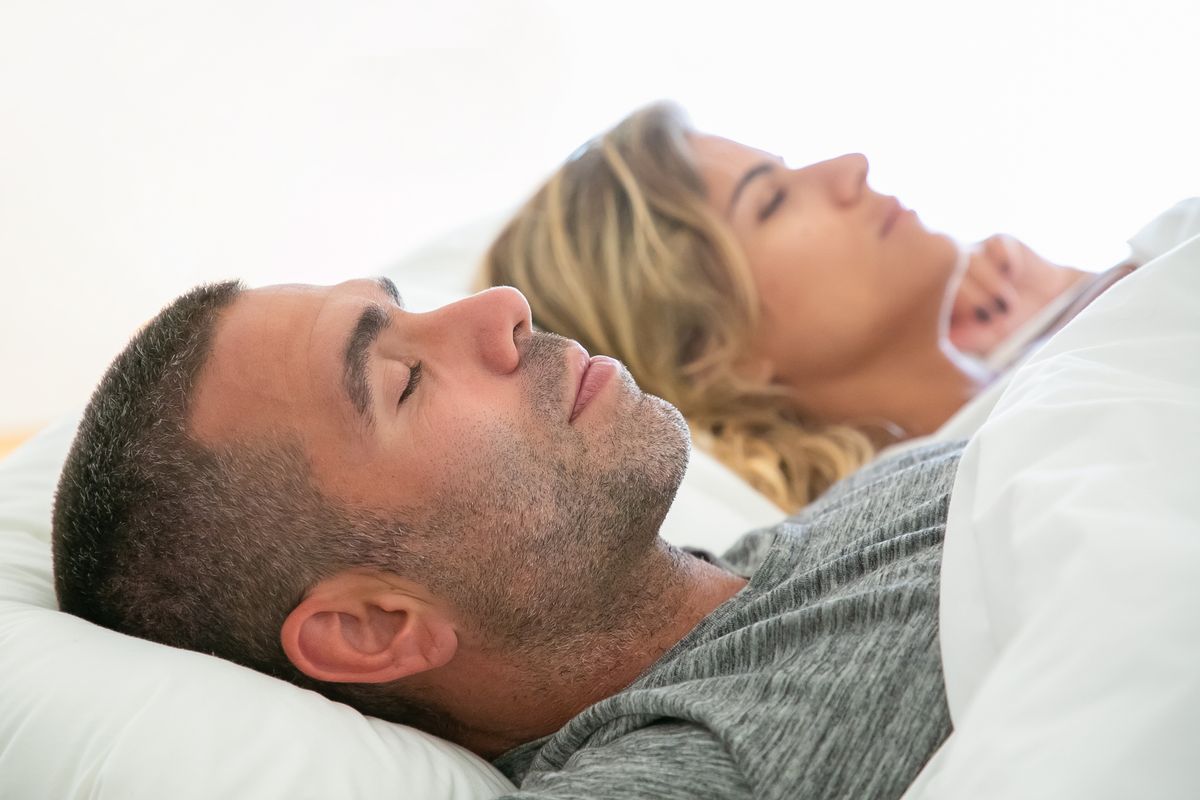
You did not move into the spare room because of your breath. You moved because of the snoring, or the shift patterns, or the baby, or because one of you is a light sleeper and it was easier.
But something else happened while you were apart, and it is worth saying plainly. You lost the ordinary, unremarkable closeness that only exists at the edges of sleep. The five minutes of talking in the dark. Waking up and finding somebody there. The reaching across without thinking about it. None of that has a scheduled slot in a marriage. It only happens if you are in the same bed, and once it stops happening you do not particularly notice its absence until you notice everything else that went with it.
The breath thing then makes it harder to come back. There is a morning version of you that neither of you wants in the room, and it becomes one more small reason not to try again. If your relationship has been quietly cooling in ways nobody has named, it is worth reading why your partner is pulling away, because this specific thing sits underneath more of those situations than people expect.
Fixing the airway is not a marriage fix. But it removes one genuine obstacle that has been sitting there for years pretending to be something else, and it is a great deal easier to solve than most of what couples end up in counselling about.
Frequently asked questions
Why is my mouth so dry when I wake up even though I drink water all day?
Because daytime hydration does not carry through eight hours of evaporation. Saliva production falls naturally during sleep, and an open mouth dries the remaining film faster than your body replaces it. Drinking more during the day helps at the margins, but it does not address the airflow across your mouth all night, which is the actual cause.
Is snoring always a sign of sleep apnoea?
No. Plenty of people snore without apnoea. The features that warrant assessment are pauses in breathing, gasping or choking, waking unrefreshed regardless of hours slept, and heavy daytime sleepiness. If any of those apply, see a doctor rather than working through home fixes.
Does mouth taping actually work for bad breath?
It can reduce overnight drying for people whose nasal breathing is genuinely unobstructed and who do not have sleep apnoea. Those two conditions matter enormously and are usually skipped in the online enthusiasm. If you snore heavily, get assessed first. If your nose is blocked, treat that first. Taping over an untreated obstruction is not a solution.
Will a humidifier fix morning breath on its own?
It helps, sometimes noticeably, but it addresses one input rather than the cause. Room humidity reduces evaporation. It does not open a blocked nose, stop reflux, or change the bacterial balance that has established itself over months of dry nights.
I use CPAP and my breath is worse than before. Is that normal?
It is common, and it usually means mouth leak, low humidification, or equipment that needs cleaning rather than a problem with therapy itself. Work through the humidifier setting, a chin strap or full face mask, and a proper cleaning schedule for the chamber and tubing. Speak to your sleep clinic before changing anything about the pressure settings.
Where to start tonight
Pick the three cheapest things and do them tonight: saline rinse the nose before bed, scrape your tongue last thing rather than first thing, and sleep on your side with the head of the bed raised. Give it a week and see whether you wake less dry.
If you snore heavily or anyone has seen you stop breathing, book the doctor. That is not a breath problem and it should not wait.
And if the drying improves but the smell does not fully go, the bacterial side is the piece left to address. The start here guide explains how the oral microbiome works and where a probiotic genuinely fits.
See the Oral Probiotic We Recommend
This article is for general information and is not medical advice. Loud snoring, gasping, choking or pauses in breathing during sleep can indicate obstructive sleep apnoea, a condition with serious health consequences that requires proper diagnosis. Speak to a doctor rather than managing it at home, and do not change prescribed medication or CPAP settings without advice.