Disclosure: This article is for general educational purposes and is not medical or dental advice. Some links are affiliate links, meaning we may earn a small commission at no extra cost to you if you choose to make a purchase. We only point readers toward things we genuinely believe can help.
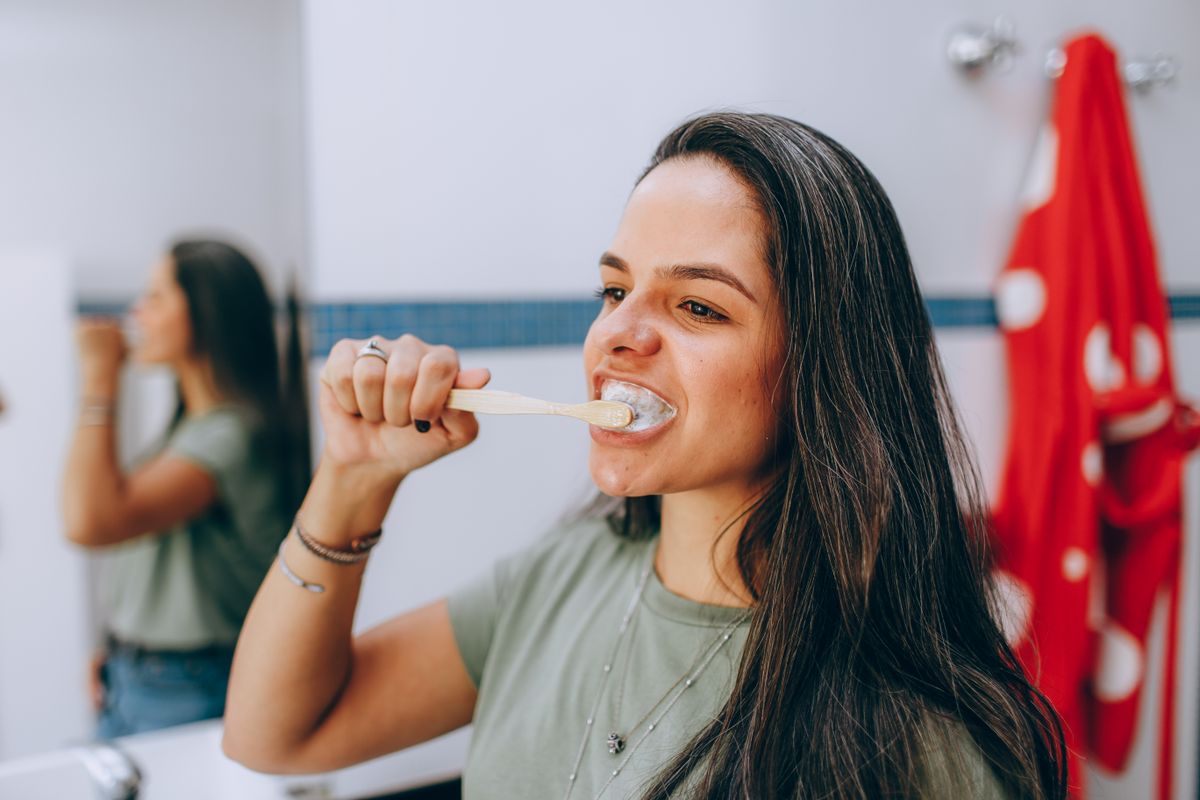
You swish, you spit, and for about an hour you are fine.
Then it comes back, and you reach for the bottle again. That is not a hygiene failure. That is the product working exactly as designed.
Most people arrive at the oral probiotics vs mouthwash question after years of the same loop. Rinse in the morning, feel confident until mid-morning, notice the taste returning around lunchtime, rinse again before anything social. It never gets worse enough to alarm you and it never gets better enough to stop.
The honest answer to which one fixes bad breath is that they are not competing products. They are doing two different jobs, and only one of them is aimed at the cause. Understanding the difference is what stops the loop.
What mouthwash actually does in your mouth
Antibacterial mouthwash works by killing bacteria on contact. Most rinses use chlorhexidine, cetylpyridinium chloride, essential oils, or alcohol as the active agent, and they are genuinely effective at what they claim: within thirty seconds, the bacterial population across your oral surfaces drops sharply.
That drop is why the freshness feels so convincing. Fewer bacteria means fewer volatile sulphur compounds, which are the rotten-egg family of molecules that odour-producing bacteria release when they break down proteins. Take the bacteria away and the smell goes with them.
The problem is what the word antibacterial leaves out. These agents are not selective. They cannot distinguish between the species producing the smell and the species that were quietly keeping those first ones in check. A rinse clears the field indiscriminately, and what happens next depends entirely on who recolonises fastest.
The rebound nobody puts on the label
Here is the part that turns a helpful product into a cycle.
After you rinse, your mouth does not stay empty. Bacterial populations begin rebuilding within minutes, and the species that rebuild fastest are the aggressive, fast-dividing anaerobes rather than the slower-growing beneficial ones. The beneficial species had spent months or years establishing themselves on those surfaces. You removed them in thirty seconds, and they do not come back at the same speed.
So the population you have four hours after rinsing is not the population you had before you rinsed. It is tilted further toward the species you were trying to remove. Do that twice a day for a year and you are applying steady selective pressure in favour of the exact bacteria causing the problem.
That is why the interval between rinses tends to shorten over time. People describe needing it before lunch when they used to manage until evening. The product has not become weaker. The ecosystem has become less able to hold itself together without it.
If you have been doing everything right and getting nowhere, this mechanism is often the missing piece, and it is the same trap described in why your breath still smells after brushing and flossing.
See the Oral Probiotic We Recommend
The alcohol problem sitting on top of it
A great many rinses are alcohol-based, and alcohol dries the tissue it touches.
Saliva is not a minor detail in this. It is the mouth’s rinse cycle, its buffer against acid, and its main route for delivering oxygen to the tongue surface. The bacteria behind bad breath are anaerobes, which means they flourish precisely where oxygen is scarce. A well-lubricated mouth is genuinely hostile to them. A dry one is an invitation.
So an alcohol rinse produces a short-term kill followed by a period of reduced saliva, during which the surviving anaerobes recolonise into conditions that suit them better than before. You have removed their competition and improved their habitat in the same thirty seconds.
For anyone already short on saliva, this matters even more. That includes people on common medications, people who breathe through their mouth at night, and anyone in the hormonal transitions that reduce flow. The mechanism is set out in dry mouth and the oral microbiome.
What an oral probiotic does instead
An oral probiotic starts from the opposite premise. The goal is not a sterile mouth. It is a balanced one.
Rather than clearing the field, beneficial strains are introduced to occupy it. They colonise the same surfaces the problem species want, compete for the same nutrients and the same physical space, and in some cases produce compounds that suppress specific harmful species directly while leaving the wider population intact.
The practical difference is coverage. A rinse protects you for the period during which its active ingredient is present, which is a matter of hours. An established beneficial population is present continuously, including through the night, which is when the problem is at its worst and when nobody is rinsing.
It is worth being precise about what that does and does not mean. A probiotic will not clean your teeth, will not remove plaque, and will not treat gum disease that has already progressed. It changes which bacteria dominate the surfaces you cannot clean, which is a narrower claim than most marketing makes, and it happens to be the specific gap that hygiene leaves open.
One frequent point of confusion is worth clearing up before you buy anything. The probiotic capsule in your kitchen cupboard is engineered to survive stomach acid and open in the intestine, which means it is designed specifically not to release anything in your mouth. That distinction is the whole subject of gut probiotics vs oral probiotics, and it is why so many people conclude probiotics did nothing for their breath.

The honest head-to-head
Neither product is a fraud. They are built for different jobs, and the mismatch happens when you use one for the other’s purpose.
- Speed. Mouthwash wins outright. Thirty seconds to noticeably fresher breath. A probiotic takes weeks. If you need to fix your breath before a meeting in ten minutes, the bottle is the correct answer.
- Duration. A rinse lasts one to three hours. An established population works continuously and does not need remembering.
- Direction of travel. Repeated broad antibacterial use tends to worsen the underlying balance over time. Colonisation tends to improve it. This is the difference that compounds.
- Overnight. Rinsing before bed leaves you protected for the first couple of hours of an eight-hour dry stretch. That is the wrong shape of protection for the biggest window of the day.
- Cost over a year. Closer than people assume once you count repeat purchases. The full arithmetic is in what to buy for bad breath.
When mouthwash is genuinely the right tool
None of this makes rinsing pointless, and pretending otherwise would be dishonest.
A fluoride rinse has real evidence behind it for cavity prevention, which is a separate job from breath and one a probiotic does not do. A chlorhexidine rinse prescribed after oral surgery or during acute gum treatment is a legitimate short-term medical intervention, and you should finish the course your dentist gave you rather than substituting anything for it. And for occasional situational use, an alcohol-free rinse before an event is a perfectly reasonable thing to own.
The problem is not mouthwash. It is daily, indefinite, broad-antibacterial mouthwash used as a treatment for a bacterial imbalance that it quietly deepens.
How to switch without leaving a gap
The mistake people make is stopping the rinse abruptly and expecting the probiotic to cover the difference immediately. It will not, because colonisation is slow, and two weeks of feeling worse is usually enough to send someone back to the bottle convinced probiotics do not work.
A more workable sequence looks like this.
Weeks one and two. Start the probiotic. Keep the rinse if you need it, but move it away from the probiotic by several hours, since an antibacterial applied on top of new colonising strains removes them along with everything else. Most people take the probiotic last thing at night after brushing, and if they still want a rinse it goes in the morning.
Weeks three and four. Halve the rinse. Once daily rather than twice, or alternate days. Add proper back-of-tongue scraping in its place, because the rear third of the tongue is where the majority of odour is actually produced and it is the surface a rinse reaches least effectively. If your tongue carries a visible film, why your tongue looks white explains what you are looking at.
Week five onward. Drop the daily rinse and keep it for occasional use. Hold the probiotic, the scraping and the water. The rest of the structure is in the daily routine to stop bad breath.
See What Changes the Bacterial Balance
What to realistically expect
Slow, and I would rather say so plainly than have you quit in week two.
You are waiting on an ecosystem to shift rather than a symptom to be covered, and the first fortnight often feels like nothing much is happening. What usually changes first is the shape of the day: the smell returning later than it used to, or the morning taste being less pronounced, before anything feels dramatically different.
Judge it at six to eight weeks rather than at ten days. The week-by-week picture is in how long oral probiotics take to work, and if the smell has never responded to anything at all, chronic bad breath and why it keeps coming back covers the causes worth ruling out first.
Frequently asked questions
Can I use mouthwash and an oral probiotic together?
Yes, but not at the same time of day. An antibacterial rinse removes the strains you are trying to establish, so separate them by several hours. Most people take the probiotic at night after brushing and keep any rinse for the morning. Over time the aim is to need the rinse less rather than to run both indefinitely.
Is alcohol-free mouthwash a good compromise?
It is better, because it avoids drying the tissue, but it does not solve the main issue. Most alcohol-free rinses still contain a broad antibacterial agent, so the indiscriminate clearing and the uneven recolonisation still happen. It removes one of the two problems rather than both.
Why does my breath come back faster than it used to?
That shortening interval is the pattern to pay attention to. It usually means the bacterial balance has shifted further toward the odour-producing species over months of repeated broad antibacterial use, so there is less natural competition holding them back between rinses.
Does mouthwash cause bad breath?
Not directly, and it genuinely reduces odour in the short term. What it can do over time is deepen the imbalance underneath, particularly if it is alcohol-based and used daily for years. People often notice this only when they try to stop and find the smell is worse than they remembered.
Will an oral probiotic replace brushing and flossing?
No, and any product claiming otherwise is not worth your money. Brushing and flossing remove plaque, which a probiotic does not do. It addresses which bacteria dominate the surfaces mechanical cleaning cannot reach, which is why it works stacked on top of good hygiene rather than instead of it.
Where to start
If you rinse occasionally and your breath is fine, nothing here needs changing.
If you are rinsing daily, the interval is shortening, and you have started planning your day around when you last swished, you are managing an output rather than changing a cause. Move the rinse away from bedtime, start scraping the back third of your tongue properly, and give the bacterial layer the several weeks it genuinely needs.
The start here guide explains how the oral microbiome works and where a probiotic fits, and best probiotics for oral health covers what to look for on a label so you do not buy the wrong category twice.
See the Oral Probiotic We Recommend
This article is for general information and is not medical or dental advice. If a rinse has been prescribed by your dentist following surgery or for active gum treatment, follow their instructions rather than changing your routine based on this article. Persistent bad breath with bleeding gums, loose teeth, facial pain or difficulty swallowing should be assessed professionally.