Disclosure: This article is for general educational purposes and is not medical or dental advice. Some links are affiliate links, meaning we may earn a small commission at no extra cost to you if you choose to make a purchase. We only point readers toward things we genuinely believe can help. Oral thrush requires diagnosis and antifungal treatment from a doctor or dentist. Nothing here replaces that.
Oral thrush that keeps coming back is almost never a treatment failure. The antifungal clears the overgrowth, but it does not restore the bacterial population that was holding Candida in check, and it does nothing about whatever tipped the balance in the first place. Until both are addressed, it returns.
You got the gel or the lozenges. You used the full course exactly as instructed. Within a week the white patches were gone, the burning stopped, food tasted normal again.
Then somewhere around week three or four you ran your tongue across the roof of your mouth and felt it. That faintly furred, slightly sore patch. Back again.
So you go back for another prescription, and it works again, and it comes back again. At some point you stop mentioning it, because it starts to feel like something you are doing wrong.
You are not. Recurrence is the normal outcome when the cause is left in place, and in most adults the cause is one of five specific things, four of which you can do something about this week.
First: is it actually thrush?
Worth establishing before anything else, because two different things get called the same thing and only one of them responds to antifungals.
Oral thrush produces creamy white or yellowish patches on the tongue, inner cheeks, palate or throat. The key feature is that the patches can be scraped or wiped off, and what is underneath is red, raw, sometimes slightly bleeding. It often comes with soreness, a burning sensation, a cottony feeling, a loss of taste, or cracking at the corners of your mouth.
An ordinary coated tongue is a whitish or greyish film across the tongue surface, usually painless, that lifts with a tongue scraper and leaves normal pink tongue underneath. That is bacterial and dead cell buildup rather than fungal, and it is covered in why your tongue looks white. Antifungals do nothing for it.
A white patch that will not scrape off at all is neither of those, and it is the one that matters most. Patches that stay put when wiped need to be examined by a dentist rather than treated at home. Most turn out to be harmless, but this is also how several conditions present that are far better caught early. Do not self-treat a patch that does not come away.
What causes oral thrush in adults
Candida albicans lives harmlessly in a large proportion of healthy mouths. It is not an invader you caught. It is a resident that is normally kept in check by competition from the bacterial population around it and by your saliva washing it away.
Overgrowth happens when something removes one of those controls. In adults it is usually one of these.
Antibiotics
The clearest example of the mechanism. Antibiotics do not distinguish between harmful and beneficial bacteria, and Candida is a fungus, so it is entirely unaffected by them. You clear out the bacterial competition and leave the fungus with open ground and no rivals. Thrush appearing during or shortly after a course of antibiotics is one of the most common presentations there is, and the recovery side of that is covered in oral probiotics after antibiotics.
Dry mouth
Saliva physically washes Candida off surfaces and contains antimicrobial proteins that limit its growth. Reduce saliva and you remove the mouth’s main mechanical defence. This is why thrush so often accompanies medication-induced dry mouth, and more than four hundred common drugs list it as a side effect, listed in medications that cause dry mouth. The wider mechanism is in dry mouth and the oral microbiome.
See What Restores the Bacterial Balance →
Your inhaler, and the step nobody explained
This is the single most under-communicated cause in the whole subject, and if you use a preventer inhaler it is very likely yours.
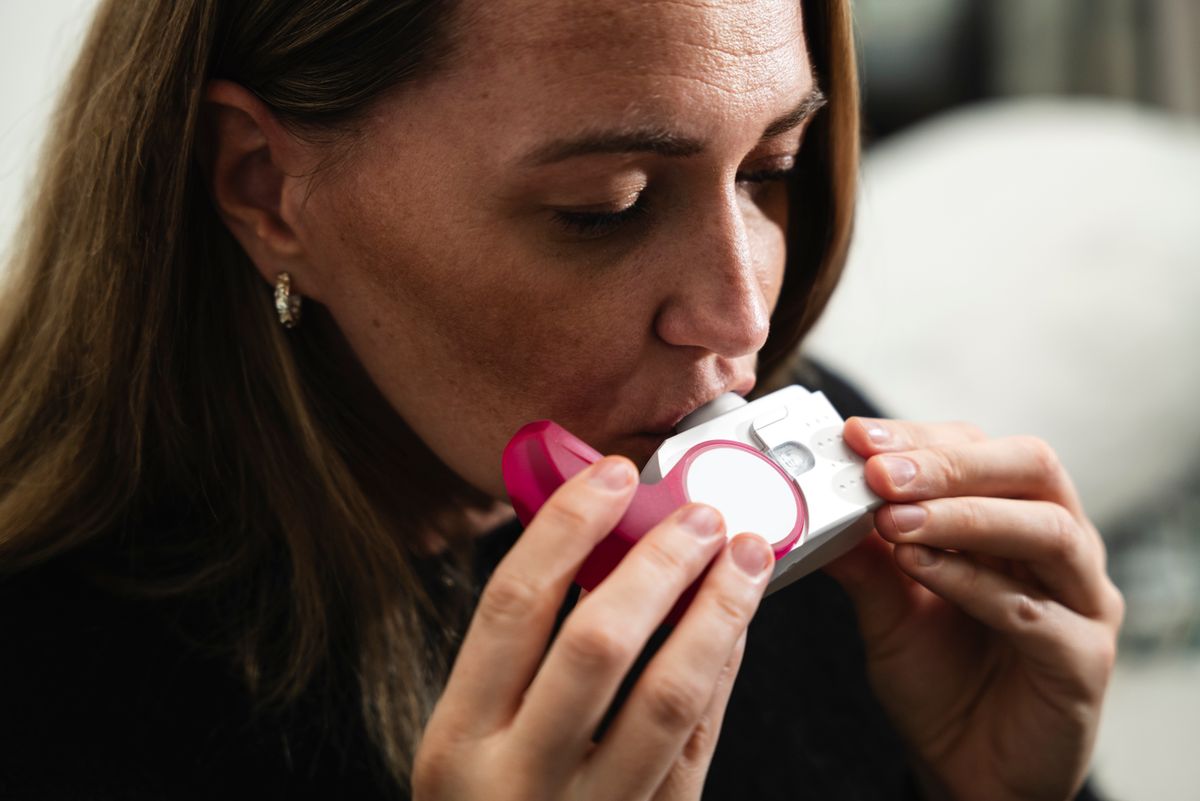
Inhaled corticosteroids are designed to reach your lungs, but a portion of every dose deposits in your mouth and throat on the way through. Corticosteroids locally suppress the immune response in that tissue, which is exactly the condition Candida needs to expand. Inhaler causing white patches in mouth is not a rare side effect. It is a documented and common one.
The fix is almost embarrassingly simple and is frequently not explained when the inhaler is prescribed:
- Rinse your mouth with water after every dose and spit it out. Do not swallow it. Gargle briefly to reach the throat.
- Use a spacer with a metered-dose inhaler. It cuts the amount depositing in your mouth substantially.
- Take it before brushing where the timing allows, so brushing clears the residue.
Do not stop or reduce your inhaler. That is not the fix and it is genuinely dangerous with asthma or COPD. Rinse, use a spacer, and tell your doctor or pharmacist that you are getting thrush, because they can review the dose, the device or the type.
Dentures
Acrylic is porous and Candida colonises it readily, forming a biofilm that a rinse under the tap does not remove. Worn overnight, a denture creates a warm, covered, low-oxygen, unwashed surface pressed against your palate for eight hours. The result, redness under the plate, is common enough to have its own name. Out at night, cleaned properly, and the tissue underneath brushed too, which is set out in bad breath from dentures, bridges and implants.
Blood sugar
Candida feeds on glucose, and when blood sugar runs high there is more of it available in saliva. Recurrent thrush is a recognised early sign of undiagnosed or poorly controlled diabetes. That is not a reason to panic, but it is a reason to mention it to your doctor rather than just collecting another prescription.
Why the antifungal works and then stops working
Here is the part that explains the whole frustrating cycle, and once you see it the pattern makes complete sense.
An antifungal reduces the Candida population. That is all it does, and it does it well. What it does not do is put anything back.
Your mouth is a competitive environment. Several hundred bacterial species occupy the available surfaces and consume the available nutrients, and that competition is a large part of what normally keeps Candida at a harmless background level. When antibiotics, dry mouth or an inhaler weakens that bacterial population, ground opens up. The antifungal clears the fungus off that ground. It leaves the ground open.
So whatever was suppressing your bacterial community before is still suppressing it, and the surfaces are still available, and Candida is still present at low levels because it always is. Give it three or four weeks and it reoccupies the space, because nothing else moved in first.
That is why treating the fungus repeatedly produces a repeating result. You are removing the occupant without ever changing the vacancy.
How to stop oral thrush recurring
In order. The first two do most of the work.
1. Remove the trigger, not just the fungus
Go through the list above and identify which one is yours. If you use an inhaler, start rinsing and spitting after every single dose and get a spacer. If you wear dentures, take them out at night without exception and clean the tissue underneath. If you have persistent dry mouth, ask your pharmacist for a medication review and whether timing can be shifted.
Without this step, everything below is temporary.
2. Finish the antifungal properly
Use the full course even after the patches disappear, which usually means continuing for several days beyond the point where it looks resolved. Stopping early is a common reason for a fast return, because the visible patches clear well before the population does.
3. Put something back in the space
This is the step nobody prescribes, and it is the one that addresses the vacancy rather than the occupant.
Beneficial bacterial strains colonise the same surfaces Candida wants and compete with it for space and nutrients. That competition is one of the things that was keeping the fungus in check before the balance tipped, and it is the specific thing antifungals do not restore. This is one of the areas where the research is genuinely reasonable rather than wishful, particularly for denture wearers and older adults, where probiotic strains have been shown in trials to reduce Candida counts.
Two honest limits. It is not a treatment, and it is not a substitute for the antifungal your doctor prescribed. And it is slow, because you are waiting on a population to establish rather than on a symptom to clear, with the realistic staging in how long oral probiotics take to work. The place it fits is after treatment, while the ground is still open and before Candida reoccupies it. The strains also have to be oral ones rather than gut ones, as explained in gut probiotics vs oral probiotics.
4. Stop using antibacterial mouthwash
Counterintuitive and important. A broad antibacterial rinse suppresses the bacterial population that competes with Candida while leaving the fungus untouched, because it is not a bacterium. You are actively clearing its competition twice a day. If you have recurring thrush and you are using a strong daily rinse, that is very likely part of the loop, and the mechanism is set out in oral probiotics vs mouthwash.
5. Clean the tongue, gently
A soft scrape helps remove the surface layer, but be gentle while tissue is sore or raw. Replace your toothbrush after a thrush episode clears, since the bristles can hold Candida and reintroduce it. Same for denture brushes.
6. Cut the easy fuel
Candida uses glucose. You do not need an elaborate diet, but reducing frequent sugary drinks and snacking, particularly between meals when saliva has settled, removes an easy food supply. The broader picture is in the best and worst foods for your oral microbiome.
See the Oral Probiotic We Recommend →
When to stop managing it at home
Please read this section rather than skimming it. Most recurring thrush is a nuisance with a findable cause. A few things in this territory are not, and they are much easier to deal with early.
- A white patch that will not wipe or scrape off. This is the important one. Thrush comes away and leaves red tissue underneath. A patch that stays fixed needs examining by a dentist, and sooner rather than at your next routine visit.
- Any sore, patch or ulcer that has not resolved within three weeks.
- Thrush that keeps returning when you have no obvious cause, meaning no inhaler, no dentures, no recent antibiotics and no dry mouth. Recurrent thrush in an otherwise healthy adult is worth a conversation with your doctor, because it can point to undiagnosed diabetes or an immune issue, and both are considerably better identified than ignored.
- Difficulty or pain when swallowing, or a feeling that food is sticking, which can mean it has extended beyond the mouth and needs prompt medical attention.
- Thrush alongside unexplained weight loss, fever or feeling generally unwell.
None of this is meant to frighten you. The point is that recurring thrush is sometimes a messenger, and the cost of having it looked at properly once is a single appointment.
Frequently asked questions
Why does my oral thrush keep coming back after treatment?
Because the antifungal reduces the fungus without restoring the bacterial population that normally competes with it, and without removing whatever weakened that population in the first place. An inhaler used without rinsing, a denture worn overnight, a recent course of antibiotics or persistent dry mouth will all keep recreating the conditions. Treat the cause and the vacancy, not just the occupant.
Can my inhaler really cause white patches in my mouth?
Yes, and it is one of the most common causes in adults. Inhaled corticosteroids deposit partly in the mouth and throat, where they locally suppress the immune response and let Candida expand. Rinsing with water and spitting after every dose, plus using a spacer, reduces it substantially. Never stop or reduce an inhaler to manage thrush, speak to your doctor instead.
How do I tell thrush from an ordinary coated tongue?
Thrush patches wipe or scrape off and leave red, raw, sometimes bleeding tissue underneath, and they are usually sore or burning. An ordinary coating lifts with a scraper leaving normal pink tongue and is generally painless. A white patch that will not come off at all is neither and should be examined by a dentist.
Is oral thrush contagious?
Not in the way a cold is. Candida already lives harmlessly in most people’s mouths, so exposure is not the issue. Whether it overgrows depends on your own conditions: bacterial balance, saliva, immune status and blood sugar. The exception worth knowing is thrush passing between a breastfeeding parent and baby, where both usually need treating together.
Can a probiotic treat oral thrush?
No, and anyone saying otherwise is overselling it. Thrush needs an antifungal from a doctor or dentist. Where beneficial strains apply is afterwards, competing for the surfaces Candida would otherwise reoccupy, which is the part the antifungal leaves undone. Support for not recurring, rather than treatment.
How long does oral thrush take to clear?
Visible patches usually improve within several days of starting an antifungal, and most courses run one to two weeks. Finish the full course even once it looks resolved. If it has not cleared by the end of the course, or returns within weeks, go back rather than simply repeating the same treatment.
Where to go from here
If you use an inhaler, start rinsing and spitting after every dose today. That one habit resolves a large share of recurring cases on its own and costs nothing.
If you wear dentures, out at night, every night, and brush the palate underneath. If neither applies and it keeps returning, book the doctor and ask them to look at blood sugar rather than just re-prescribing.
Then address the part the antifungal leaves behind. The ground it clears stays open until something else occupies it, and that is where supporting the bacterial population genuinely earns its place. Our daily oral routine sets out the supporting habits, and if you have tried a probiotic before without result, oral probiotics not working covers the usage mistakes that quietly cancel the dose.
For the full picture of how the oral microbiome works, along with the specific oral probiotic we recommend and the strains that matter, start at our Start Here guide.
The antifungal handles the outbreak. What you do in the following month decides whether there is another one.