Disclosure: This article is for general educational purposes and is not medical or dental advice. Some links are affiliate links, meaning we may earn a small commission at no extra cost to you if you choose to make a purchase. We only point readers toward things we genuinely believe can help.
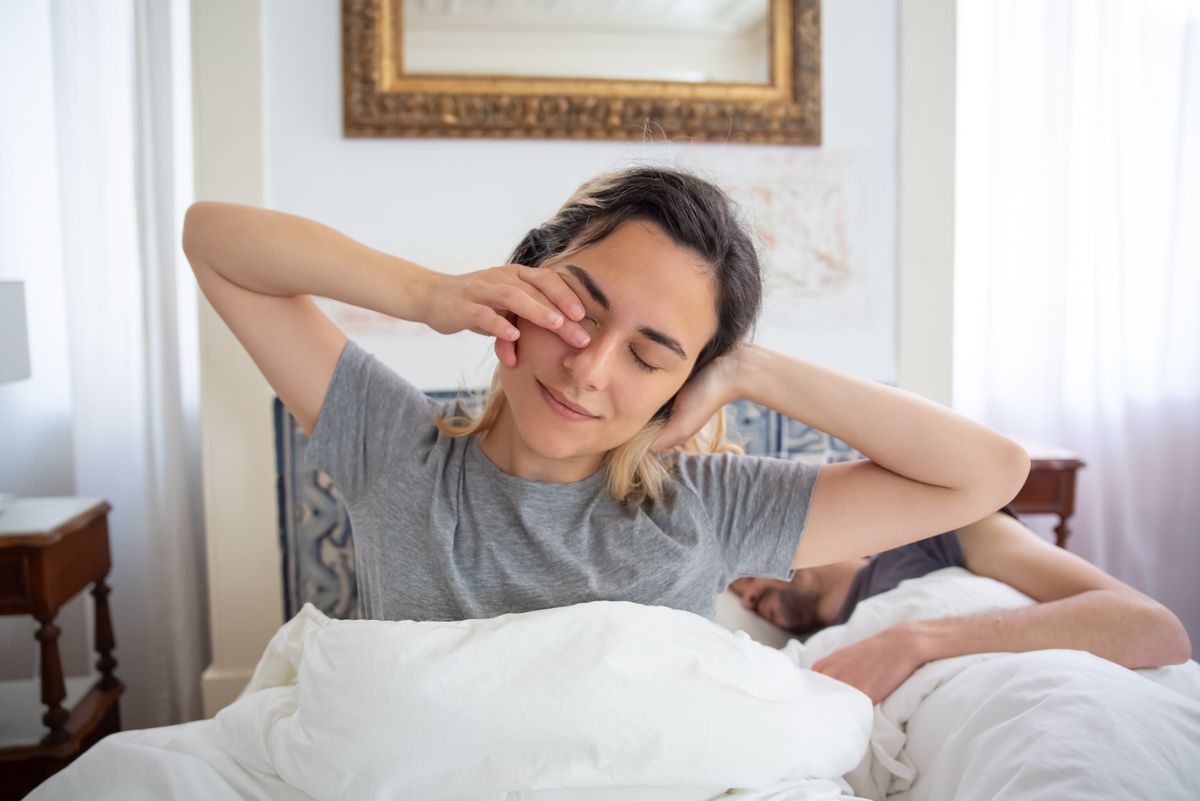
Morning breath when you stay over is not a sign that something is wrong with you. Saliva production drops to a fraction of its daytime level while you sleep, which removes the mouth’s main defence for eight straight hours. Everybody wakes up with it. What you can change is how bad yours is, and almost all of that is decided before you fall asleep.
You are not worried about the night.
The night is the easy part. You will have brushed before you left, you will have been careful about what you ate, and in the moment none of it will be on your mind anyway.
What you are worried about is six in the morning. Lying very still, awake before they are, doing the maths on whether you can get to a bathroom without it being obvious. Deciding whether to face the wall. Working out what you will do if they roll over and say good morning directly into your face.
Half the pleasure of the first night somewhere new gets eaten by that, and it is a shame, because the thing you are dreading is both completely normal and largely preventable.
Why morning breath peaks at exactly the wrong moment
This is worth understanding properly, because it tells you where to intervene and it also takes some of the shame out of it.
During the day your mouth produces somewhere around half a litre of saliva. Saliva is not just moisture. It physically rinses away food debris and dead cells, it buffers acid, and crucially it carries oxygen into the mouth.
That last part matters more than anything else here. The bacteria responsible for the worst-smelling breath are anaerobes, which means they thrive where oxygen is scarce. They break down proteins and release volatile sulphur compounds as a waste product, and those compounds are what you are actually smelling.
During sleep, saliva production falls to a small fraction of the daytime rate. Oxygen levels in the mouth fall with it. For seven or eight uninterrupted hours those bacteria have warmth, moisture, a food supply and almost no competition, and nothing is washing their output away.
By morning they have produced a full night’s worth. That is why it peaks at the exact moment you least want it to, and the fuller mechanism is in why morning breath is so bad.
Three things make it considerably worse, and all three are more likely on a first night somewhere new.
- Alcohol. It is a diuretic, so it reduces saliva further on top of the normal overnight drop, and most drinks bring sugar with them. The full picture is in bad breath after drinking alcohol.
- Sleeping with your mouth open. Which you are more likely to do in an unfamiliar bed, after a drink, or if your nose is even slightly blocked. It dries everything out faster, and the mechanism is covered in mouth breathing at night.
- Eating late. Protein-rich food left between teeth is the raw material the whole process runs on.
See What Changes the Bacterial Balance →
What to do before sleeping next to someone
Almost everything that matters happens before you close your eyes. If you only do two of these, do the first two.
Scrape your tongue, not just brush it
The single highest-return thing on this page. The back third of your tongue holds the largest bacterial reservoir in your mouth, and a toothbrush barely disturbs it. A scraper takes fifteen seconds and you are clearing that population immediately before the eight hours in which it would otherwise multiply unchecked.
If you are staying somewhere overnight, a scraper is small enough to live in a wash bag permanently. Most people have never used one, and most people who start notice the difference within a couple of mornings.
Clean between your teeth
Floss or interdental brushes before bed rather than in the morning. Trapped protein between teeth is fuel, and leaving it there overnight is handing the process its raw material.
Skip the mouthwash
Counterintuitive, and it catches a lot of people on exactly this night, because reaching for an extra step feels like doing more. Most rinses are alcohol-based and dry the mouth further, which is the opposite of what you want before eight hours of reduced saliva. Antibacterial formulas also suppress the beneficial species alongside the harmful ones, and the harmful ones recolonise faster. The full version is in oral probiotics vs mouthwash.
Stop drinking earlier than you think
You do not have to skip the wine. Moving the last drink two or three hours earlier, and having a glass of water alongside, changes the morning more than people expect.
Water within reach
Ask for a glass, or bring one up with you. If you wake in the night, drink some. Overnight is when it compounds, and a few mouthfuls at 3am genuinely helps.
Breathe through your nose
If your nose is blocked, a saline spray before bed makes nose breathing possible, and nose breathing keeps your mouth closed and far less dry. Sleeping on your side rather than flat on your back also helps keep your mouth shut.
If you did not plan to stay
Sometimes the first time staying at their place is not planned at all. Dinner runs late, the last train goes, and you find yourself there with no toothbrush, no scraper and nothing in your bag but your keys. This is where most of the dread comes from, so it is worth knowing that the routine above mostly still works without any equipment.
If you are wondering how to avoid morning breath overnight with none of your usual kit, start with water. Drink a full glass before bed and rinse it vigorously around your mouth first, pushing it between your teeth. Plain water does a surprising amount of what floss does for loose debris.
If there is toothpaste in the bathroom, a clean finger with a pea-sized amount gets you most of the benefit of brushing. Work it over the back of your tongue as well as your teeth, because that is where the overnight population lives. Spitting without rinsing afterwards leaves a thin layer working through the night.
It is also perfectly fine to ask whether they have a spare toothbrush. Plenty of people keep one for exactly this reason, and the question tends to land as considerate rather than awkward. Nobody has ever been put off by someone wanting to brush their teeth.
In the morning, something crunchy helps if there is breakfast. An apple, toast or raw vegetables physically scrub the tongue surface and kick saliva production back into gear. A coffee on its own does the opposite, so have water alongside it.
The morning itself
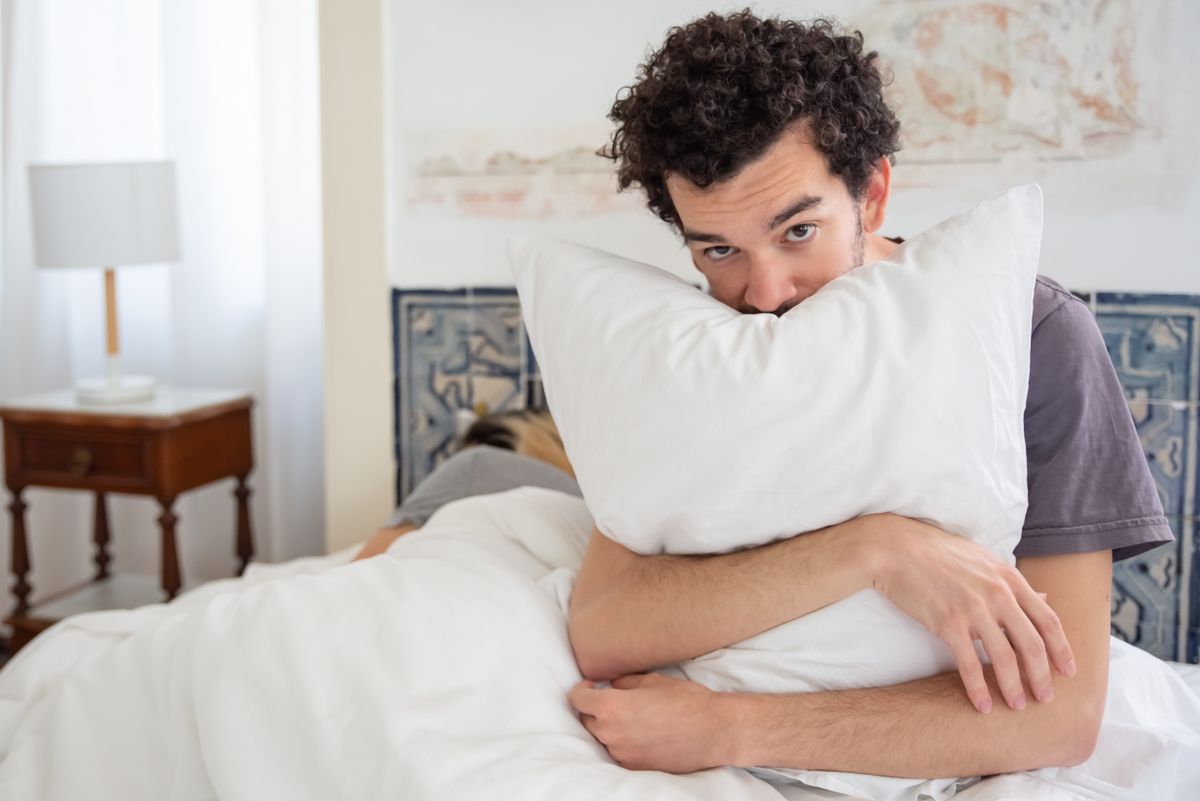
You wake up first. Here is what actually helps in the two minutes before they stir, and what to stop doing.
Drink water. Properly, not a sip. Rehydrating restarts saliva flow faster than anything else available to you, and saliva is the thing that has been missing all night.
Move your mouth. Swallowing, talking quietly, even chewing nothing at all stimulates saliva. Lying completely still with your mouth shut is the worst thing for it, and it is exactly what the anxiety makes you do.
Go and brush if you can do it naturally. Needing the bathroom in the morning is the least suspicious thing a human being does. Nobody is reading anything into it. If you have a scraper with you, use it.
What not to do: do not lie there holding your breath or breathing through your teeth. Do not keep a mint in your mouth overnight, which is a choking risk and feeds bacteria sugar all night. Do not swill mouthwash first thing either, for the reasons above.
And one thing worth holding onto: they also have morning breath. Everyone does. You cannot smell your own, which is why yours feels like a unique catastrophe and theirs does not register, and that asymmetry is explained in why you cannot smell your own breath.
When it is not just a one-night worry
There is a version of this that the night-before routine does not solve, and it is worth separating out honestly.
If this is occasional nerves before a first night with someone new, everything above is enough. Do it and the morning will be unremarkable.
But if you are scared of morning breath with a new partner every single time, and it has shaped how you date, where you stay, whether you invite anyone back, then the problem is not the night. It is the baseline you are starting from, and no amount of preparation fixes a baseline.
The honest marker is this. Ordinary morning breath clears within twenty minutes of water, brushing and breakfast, and does not return until the next morning. If yours is still noticeable at eleven, or comes back by mid-afternoon after a proper clean, that is not a sleep problem. That is a bacterial population that has shifted, and it is operating all day with the night simply being when it is most obvious.
Your mouth holds several hundred bacterial species competing for the same surfaces. When the odour-producing anaerobes dominate, they reassert themselves within hours of any cleaning, because cleaning removes what they produced rather than changing who is producing it. That is why your routine keeps feeling like it is not working despite being perfectly adequate.
An oral probiotic addresses that specific layer, introducing beneficial strains that colonise the same ground and compete for the same space and nutrients. It shifts the balance rather than temporarily clearing the output. It is also slow, and I would rather say so than let you buy something expecting it to rescue Saturday night, because you are waiting on an ecosystem to change over weeks, as set out in how long oral probiotics take to work.
It is worth it if the dread is a pattern rather than an occasion. Dry mouth makes the whole thing worse, so if you also wake parched most days, dry mouth and the oral microbiome covers that overlap.
See the Oral Probiotic We Recommend →
Frequently asked questions
Does everyone get morning breath?
Yes. Saliva production drops to a fraction of its daytime level during sleep, which removes the mouth’s main cleaning and oxygenating system for seven or eight hours. It is universal and it is not a hygiene failure. What varies is severity and how quickly it clears once you are up and drinking water.
How can I avoid morning breath overnight at someone else’s place?
Scrape your tongue and clean between your teeth before bed, skip the mouthwash, move your last drink earlier, keep water by the bed, and breathe through your nose. Those five cover most of it, and a tongue scraper is small enough to keep in a wash bag permanently.
Should I sneak off to brush before they wake up?
If you can do it without contortions, yes, it genuinely helps. But needing the bathroom in the morning is completely unremarkable and nobody reads anything into it, so there is no need to treat it as a covert operation. Drinking a glass of water first does more than the brushing itself.
Will chewing gum or a mint overnight help?
No, and do not sleep with anything in your mouth. It is a choking risk, and sugar or even sweetener sitting against your teeth for eight hours feeds the exact bacteria you are trying to limit. Gum in the morning is fine and helps by stimulating saliva.
Why is my morning breath worse after a night out?
Alcohol is a diuretic, so saliva drops further than it normally would overnight, and most drinks add sugar. You are also more likely to sleep with your mouth open and skip part of your routine. The three stack up, which is why that particular morning is reliably the worst.
My morning breath does not clear after brushing. Is that normal?
Not really. Ordinary morning breath resolves within about twenty minutes of water, brushing and eating. If yours persists into late morning or returns by the afternoon, that points to a bacterial balance issue running all day rather than something caused by sleep, and it is worth treating as a baseline problem instead of a morning one.
Where to go from here
For the night itself: tongue scraper, floss, no mouthwash, last drink earlier, water by the bed. That is the whole plan and it takes about four minutes.
In the morning: water first, move your mouth, go and brush without treating it as a mission. And remember they woke up with exactly the same thing and are not thinking about yours.
If the dread turns up every time rather than occasionally, the useful work is on your ordinary baseline rather than on any single night. Our daily routine to stop bad breath sets out the full sequence, and if the fear has started shaping whether you let anyone get close at all, being afraid to kiss because of bad breath deals with that directly.
For the underlying picture of how the oral microbiome works, along with the specific oral probiotic we recommend and the strains that matter, start at our Start Here guide.
The morning you are dreading is four minutes of preparation away from being a morning you do not think about at all.