Disclosure: This article is for general educational purposes and is not medical or dental advice. Some links are affiliate links, meaning we may earn a small commission at no extra cost to you if you choose to make a purchase. We only point readers toward things we genuinely believe can help.
Your toothbrush is the one tool you trust to fix your breath. But a brush that is old, damp or stored badly can quietly work against you. Here is how to tell, how to clean and store it, and what to do when a fresh brush still does not fix the smell.
You brush twice a day. You might even brush a third time before you go out.
And still, an hour later, your breath is not what you want it to be.
Then one morning you lift your toothbrush out of the cup and notice it. A faint sour, musty smell coming off the bristles themselves.
That moment raises an uncomfortable question. If the thing you clean your mouth with smells bad, what have you been putting back in your mouth every day?
The good news is that this is one of the easiest problems on this site to fix. The less comfortable news is that the toothbrush is often a symptom of something bigger, and that bigger thing is what decides whether your breath stays fresh.
Can your toothbrush cause bad breath?
It can play a part, but it is rarely the whole story.
Your toothbrush picks up bacteria from your mouth every time you use it. That is normal. The question is what happens to those bacteria between brushes.
The American Dental Association (ADA) warns that a moist environment, such as a closed container, is more likely to grow unwanted bacteria than the open air. CDC guidance says the same thing: covered brushes and closed containers create a humid space that suits bacteria better than open air does.
So a brush that never dries out can hold more bacteria and start to smell. But here is the part most people miss. The bigger way a toothbrush hurts your breath is not the bacteria on it. It is how well it cleans.
The ADA notes that a worn toothbrush will not do as good a job cleaning your teeth. Splayed, flattened bristles skim over plaque instead of lifting it. Plaque left behind feeds the odor-producing bacteria that release sulfur gases, the rotten-egg smell behind most bad breath.
In other words, an old brush does not usually give you bad breath directly. It just stops removing the cause.
See What Changes the Bacteria Behind Bad Breath →
Why does my toothbrush smell bad?
A toothbrush should smell like nothing, or faintly like toothpaste. If yours smells sour or musty, one of these is usually behind it.
1. It never fully dries
A brush that goes into a closed cup, a travel cover or a drawer while it is still wet stays damp for hours. That is the humid setting both the ADA and CDC warn about.
2. Toothpaste and food are left in the base
The tightly packed bristles near the head trap paste and debris. If you only give it a quick shake, that buildup sits there and breaks down.
3. It is past its best
Older bristles fray and spread, which creates more gaps for debris to collect in. The longer a brush is in use, the harder it is to rinse clean.
4. It is crowded in with other brushes
Brushes packed into one cup touch each other and stay wet longer. The ADA advises keeping stored toothbrushes separated to prevent cross contamination. This is also how partners end up passing the same bacteria back and forth, which we explain in is bad breath contagious.
5. Your mouth is sending it a heavy load
If your breath is already strong, the bacteria causing it end up on your brush every single time. A smelly brush can simply be a mirror of a mouth that needs more help than brushing alone gives it.
How to clean a smelly toothbrush
You do not need gadgets or harsh chemicals. You need a routine that removes debris and lets the brush dry.
After every use
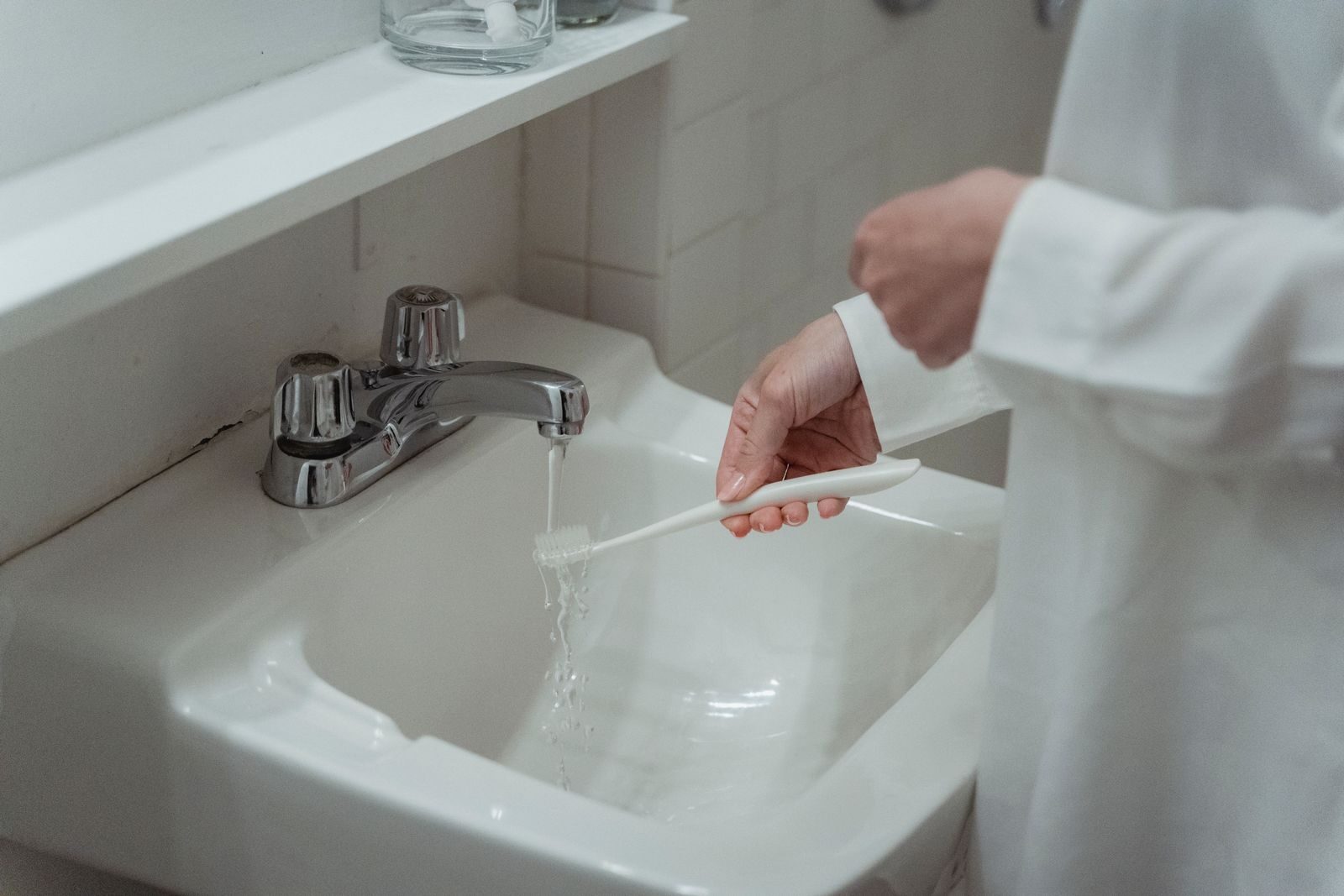
- Rinse it well under the tap. The ADA and CDC both recommend rinsing with tap water to remove leftover toothpaste and debris.
- Work the bristles with your thumb while you rinse, so paste trapped near the base washes out.
- Tap off the extra water and stand it upright to air dry.
What about soaking or sanitizing?
Soaking a brush in mouthwash or buying a sanitizer feels like the thorough thing to do. The evidence is less impressive than the marketing.
In a study presented at the American Society for Microbiology annual meeting, researchers at Quinnipiac University tested toothbrushes from shared student bathrooms. They found no difference between rinsing with cold water, hot water or mouthwash, though the mouthwash group was very small.
The simple steps above are what the ADA and CDC actually recommend. If you want extra peace of mind, there is no harm in an occasional soak, but do not let it replace drying and regular replacement.
Clean the holder too
Look at the bottom of your toothbrush cup. That slimy film is where the water from your brush drains. Wash the holder with hot soapy water every week and let it dry fully before the brush goes back in.
The best way to store your toothbrush
Storage is where most smelly brushes go wrong, and it is the easiest thing to change tonight.
- Upright, head up. The ADA and CDC both recommend storing your brush upright so it can air dry.
- Uncovered. Do not routinely cover your toothbrush or keep it in a closed container. Save travel caps for actual travel, and take the cap off as soon as you arrive.
- Not touching other brushes. Give each brush its own slot or space so they cannot touch.
- Away from the toilet. Keep it as far from the toilet as your bathroom allows, and close the lid before you flush.
- Never shared. Not with a partner, not just once. Sharing a brush means sharing the bacteria on it.
That last point matters more than people think. In the Quinnipiac study, the bathrooms were shared by about nine people on average. The researchers reported an 80% chance that the gut bacteria found on brushes came from another person using the same bathroom. You do not need to panic about this. You just need to give your brush its own space.
How often to replace your toothbrush
This is the single most useful change for most people, because a fresh brush simply cleans better.
The ADA recommends replacing your toothbrush every three to four months, or sooner if the bristles are visibly matted or frayed. That applies to manual brushes and to electric brush heads.

Replace it sooner if:
- The bristles splay outward or look flattened, even if it is only a few weeks old.
- It still smells after a good rinse and a full day of drying.
- You have been sick. Many dental groups suggest a fresh brush after a cold, flu or sore throat. We cover the full reset in bad breath after being sick.
- You have just had thrush. Bristles can hold yeast, as we explain in oral thrush that keeps coming back.
A simple trick: replace your brush at the start of every season. Write the date on the handle with a marker if you tend to forget.
If you wear a night guard, retainer or aligners, the same rules apply to the appliance and its case. See night guard smells bad and bad breath from braces, aligners and retainers.
New toothbrush, same bad breath?
Here is the frustrating part. Plenty of people replace their brush, store it perfectly and still have bad breath a week later.
That is because a toothbrush only reaches part of your mouth. It cleans the smooth surfaces of your teeth well. It barely touches the two places where most odor actually starts.
- The back of your tongue. This is the biggest bacterial reservoir in your mouth. A tongue scraper clears it in seconds. If yours looks coated, read why is my tongue white.
- Between your teeth and under the gumline. A brush cannot fit there. If your floss smells after using it, that is a clue, covered in why does my floss smell bad.
Even after both, bacteria start settling back onto clean surfaces within hours. If your mouth is dominated by odor-producing species, they win the race every time. That is why so many people find their breath smells after brushing and flossing even when they do everything right.
See the Oral Probiotic We Recommend →
Where an oral probiotic fits
Brushing, scraping and flossing all remove bacteria. An oral probiotic works on the other half of the problem: what grows back.
It adds beneficial strains that settle on your tongue, gums and teeth, where they compete with odor-producing bacteria for space and food. Over time, a mouth with more of those friendly strains is a mouth that produces less of the smell, and a mouth that sends less of it onto your toothbrush.
Three honest points:
- It does not replace brushing, flossing, a fresh toothbrush or your dentist. It works alongside them.
- It has to dissolve in your mouth. A capsule you swallow goes straight to your gut, as explained in gut probiotics vs oral probiotics.
- It works over weeks, not hours. If you tried one before and gave up, oral probiotics not working covers the common mistakes.
Take it at night after you brush, and let it dissolve slowly. That way your new routine removes the bad bacteria and helps decide what replaces them.
When to see your dentist
A smelly toothbrush is usually a habits problem. But book an appointment if you notice any of these:
- Gums that bleed every time you brush, look red or swollen, or are pulling back from your teeth. These can be early gum disease, which we cover in the early gum disease window.
- Bad breath that does not improve after two weeks of a better routine.
- A loose tooth, a toothache or a bad taste around one tooth.
- Facial swelling, fever or pain that is getting worse. These can signal an infection. Get urgent dental or medical care rather than waiting.
Start Your Fresh Breath Plan →
Toothbrush and bad breath: frequently asked questions
Can a dirty toothbrush cause bad breath?
It can contribute, but it is rarely the main cause. A brush that stays damp can hold more bacteria, and a worn brush cleans plaque less well, which leaves food for odor-producing bacteria. Most bad breath starts on the back of the tongue and between the teeth.
Why does my toothbrush smell bad?
Usually because it does not dry out between uses, toothpaste and debris are trapped near the base, it is old and frayed, or it is stored touching other brushes. A strong smell can also reflect a heavy load of odor bacteria from your mouth.
How do I clean a smelly toothbrush?
Rinse it well under the tap after every use, working the bristles with your thumb, then store it upright and uncovered so it can air dry. Wash the holder weekly. If it still smells after a full day of drying, replace it.
How often should I replace my toothbrush?
The American Dental Association recommends every three to four months, or sooner if the bristles are matted or frayed. Many people also replace it after being sick. The same timing applies to electric brush heads.
Should I keep my toothbrush covered?
Not routinely. The ADA and CDC both say covered brushes and closed containers stay moist, which suits bacteria better than open air. Store it upright and uncovered, and only use a cap while travelling.
Why do I still have bad breath with a new toothbrush?
A toothbrush cannot reach the back of the tongue or under the gumline, where most odor starts, and bacteria recolonize clean surfaces within hours. Add tongue scraping and flossing, and support a healthier balance of mouth bacteria so the smell does not keep coming back.
Where to go from here
For the full morning-to-night version of everything above, follow our daily routine to stop bad breath. If you are weighing up scrapers, rinses and gadgets, what to buy for bad breath compares the real cost of each.
And if you want to see the specific oral probiotic we recommend, the strains that matter and how to take it, start at our oral probiotic Start Here guide.
A fresh, dry toothbrush is a small win. Pair it with a mouth that grows back the right bacteria, and fresh breath stops being something you have to keep checking.