Disclosure: This article is for general educational purposes and is not medical advice. Some links are affiliate links, meaning we may earn a small commission at no extra cost to you if you choose to make a purchase. We only point readers toward things we genuinely believe can help.

You do not get to lean back.
Most jobs let you keep a polite distance. Yours does not, and that changes everything about how you think about your breath.
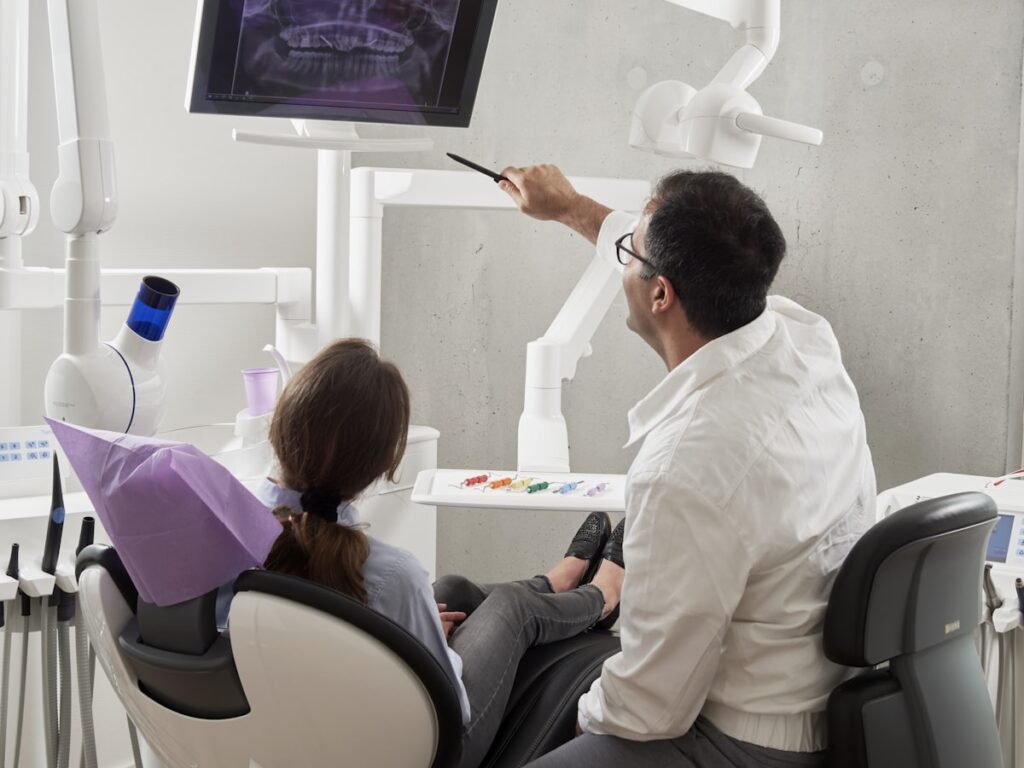
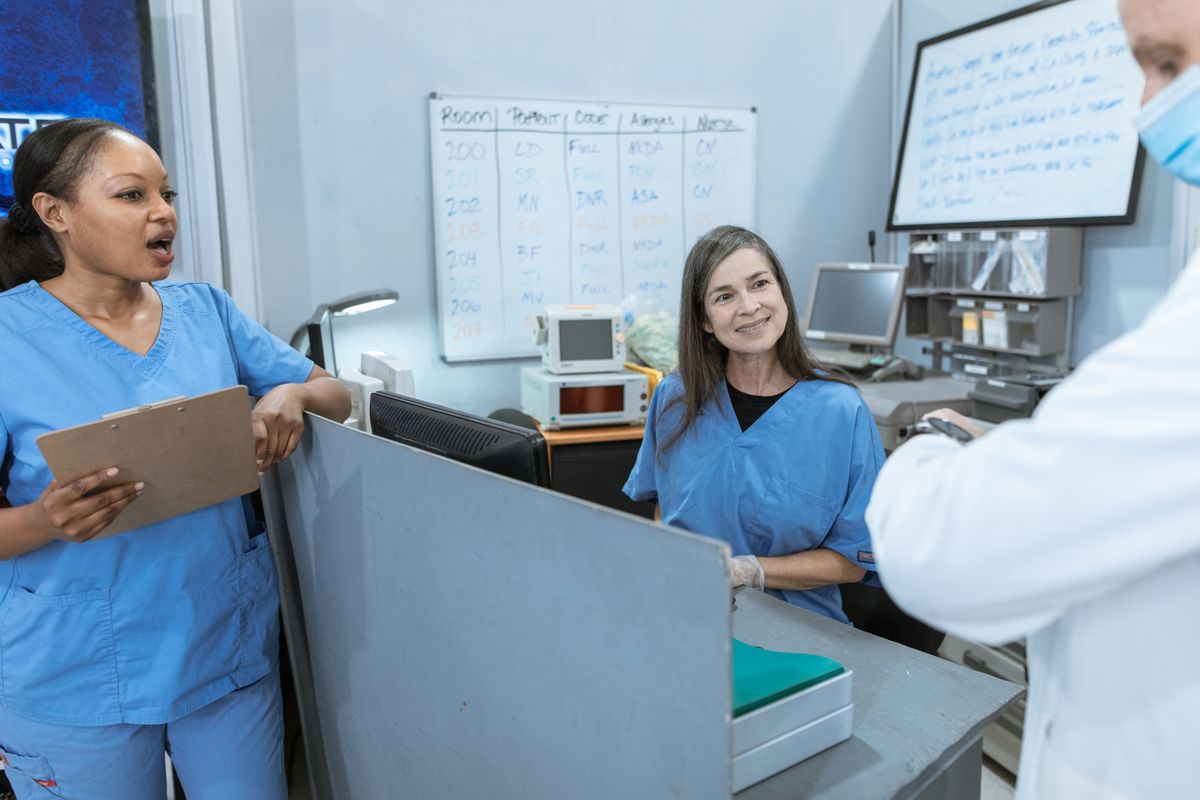
A nurse leans over a bed rail to check a line. A dental hygienist works six inches from an open mouth for forty minutes at a stretch. A teacher crouches beside a desk to explain the same thing for the fourth time that morning. A stylist stands over a chair, talking, for the better part of an hour. A physiotherapist counts reps face to face. A flight attendant bends into row after row after row.
For all of them, breath is not a private matter that surfaces occasionally on a date or in a crowded lift. It is a working condition. It is present in every single interaction of a ten or twelve hour shift, and there is no version of the job where you can quietly step back and manage it later.
So you compensate. Mints live in a scrub pocket. You turn your head a fraction when you speak. You talk from the side of your mouth without realising you are doing it. You stop leaning in at exactly the moment a frightened patient or a struggling child most needs you to. And the tiring part is not really the breath. It is the constant background calculation running underneath every conversation you have at work.
If you have ever gone looking for advice about bad breath talking close to people at work, you will have noticed how little of it is written for your situation. Bad breath as a nurse on an all-day shift is a different problem from bad breath on a date, and it needs a different answer.
Here is what almost nobody tells people in close-contact jobs: the reason your breath fails around hour five or six has very little to do with how carefully you brushed at 5:40 that morning. It has to do with what a shift does to your mouth. Once you understand that mechanism, the fix stops being about willpower and starts being about targeting the right thing.
Why bad breath at work is a different problem in close-contact jobs
When most people worry about breath, they are worried about moments. A meeting. A first date. A conversation with a boss. Moments can be managed with a mint and a bit of luck.
Close-contact work is not a moment. It is six hundred moments in a row, and the odds catch up with you. If your breath holds for three hours and your shift is twelve, you are exposed for nine of them regardless of how good your morning routine is.
There is a second problem stacked on top of the first, and it is the one that quietly does the most damage: you cannot audit yourself. Your own nose adapts to your own breath within about a minute, which is why you cannot smell your own breath no matter how hard you try. In a job where nobody will ever tell you, that leaves you guessing for an entire career.
And the professional cost is real. In roles built on trust and proximity, patients go quiet, clients do not rebook, colleagues stop pairing up with you on tasks. None of it gets said out loud, which is precisely why bad breath and your career can be tangled together for years before anyone connects the two.
See the Oral Probiotic We Recommend
Why your breath fails by mid-shift and not in the morning
Almost every close-contact worker describes the same arc. Fine at handover. Fine through the first round. Somewhere between hour four and hour six, something turns, and by the last stretch of the shift you are actively avoiding people’s faces.
That arc is not random. Four things are happening to your mouth while you work, and they compound.
1. Talking all day dries you out
Saliva is the mouth’s cleaning system. It rinses away food debris, buffers acid, and carries oxygen, which matters enormously because the bacteria that produce the worst-smelling compounds thrive in low-oxygen conditions. Reduce saliva and you remove the single biggest thing keeping odour in check.
Talking dries the mouth mechanically. Hours of it, in a dry building with the heating or air conditioning running, dries it further. Add a mask across your face for part of the day and you are breathing through your mouth more than you realise. This is the same underlying mechanism behind dry mouth and your oral microbiome, and it is the number one reason a shift ends worse than it started.
2. Coffee is doing more damage than it is worth
Shift workers run on coffee, and coffee is close to a perfect storm for breath. It is acidic, it is mildly dehydrating, it leaves a residue on the tongue, and it lowers the pH of the mouth in a way that favours exactly the bacteria you do not want. If you drink three or four cups across a shift you are effectively re-seeding the problem every couple of hours. The full mechanism is worth understanding if coffee is non-negotiable for you, and it explains why coffee makes breath worse even when you drink it black.
3. You are not eating on a normal schedule
Long gaps without food mean long gaps without the chewing that stimulates saliva. A skipped lunch, a snatched five minutes at 3pm, a protein bar eaten standing up. Each gap is a stretch of hours where your mouth is producing less saliva than it should, and where the bacterial population gets an uninterrupted run.
4. Stress tightens the whole loop
A hard shift raises stress, and stress reduces saliva flow, shifts you towards mouth breathing, and makes you clench. Then the awareness of your breath adds its own layer of stress on top. That feedback loop is well documented, and if your worst days at work are also your worst breath days, the link between stress and bad breath is probably not a coincidence.
Why mints and mouthwash stop working by hour six
Every close-contact worker has a pocket system. Mints, gum, a travel bottle of mouthwash in a locker, maybe a toothbrush kept at work. These are not stupid. They are the obvious response to the problem. They just do not survive a long shift, and it is worth being precise about why.
Mints and gum work by masking. Sugar-free gum has a genuine secondary benefit, because chewing stimulates saliva, which is real help. But the masking layer lasts twenty to forty minutes, and the odour source is untouched underneath it. On a twelve hour shift you would need something like twenty of them, and by mid-afternoon your mouth is coated in sweetener and more irritated than it was.
Mouthwash is the more interesting failure. Most conventional rinses are antibacterial, which sounds ideal until you consider what they kill. They are indiscriminate. They wipe out the beneficial bacteria that keep odour-producing species in check alongside the harmful ones, and the harmful species tend to recolonise faster. Many rinses are also alcohol-based, which dries the mouth further, which is the exact condition you were trying to avoid. That is the trap laid out in full in oral probiotics vs mouthwash.
The pattern is the same across all of them. They manage the symptom for a window shorter than your shift. This is also why so many people who do everything correctly still find that their breath smells after brushing and flossing within a couple of hours. The effort was never the issue.
See What Actually Fixes the Cause
How to keep breath fresh during a 12 hour shift
The goal is not fresher breath at 6am. You already have that. The goal is breath that is still acceptable at hour nine, when you are tired and leaning over someone. That takes a routine built around the shift rather than around the bathroom mirror.
Before the shift
Brush, then scrape the tongue properly. Most of the odour-producing bacteria in the mouth live on the back third of the tongue, in the rough surface you never reach with a toothbrush, and a dedicated scraper used from as far back as you can comfortably tolerate removes far more than brushing the tongue does. Do it before the shift rather than only at night, because you are clearing the overnight buildup before it has ten hours to work on you.
Then eat something. Even a small breakfast gets saliva moving before you start talking, and starting a shift on an empty, dry mouth puts you behind from the first patient or the first client.
During the shift
Water is the single highest-return habit available to you, and almost nobody in these jobs drinks enough of it. Not because they do not know, but because there is no time and no convenient place. Keep a bottle wherever your role allows one and drink on a schedule rather than on thirst, because thirst arrives well after your saliva has already dropped.
Sugar-free gum between appointments is worth using for the saliva stimulation rather than the flavour, so choose one with xylitol if you can. If coffee is essential, drink water immediately after each cup rather than letting the residue sit. And if you are somewhere with a staff bathroom, a thirty second tongue scrape at your break is worth more than any rinse you could do in the same time.
After the shift
Full clean, including flossing, because the gaps between teeth are the other reservoir. A structured version of all of this, laid out in order, is in the daily routine to stop bad breath, and it is worth following exactly for a couple of weeks before deciding whether it is working.
Do all of this and most people see genuine improvement. What they usually do not see is the problem going away, and there is a reason for that.
The layer most close-contact workers never fix
Everything above is management. It removes odour that has already been produced and it supports saliva so less gets produced. None of it changes who is living in your mouth.
Your mouth holds several hundred bacterial species, and the ones responsible for persistent odour produce volatile sulphur compounds as they break down proteins. They are anaerobic, meaning they flourish where oxygen and saliva are scarce, which is exactly the environment a long shift creates. When those species dominate, your breath is not a hygiene failure. It is a population problem, and it reasserts itself within hours of every clean because the population itself never changed.
The alternative approach is to change the population rather than repeatedly clearing its output. That means introducing beneficial strains that colonise the same surfaces, compete for the same space and nutrients, and shift the balance away from the odour producers. This is the principle behind the oral probiotic we recommend, and it is worth understanding that this is a different category from the gut probiotics most people have tried. Different strains, different destination, and one does essentially nothing for your breath.
It is also not instant, which is the honest part. You are waiting on an ecosystem to change rather than a symptom to be covered, and that runs on weeks rather than hours. The realistic week-by-week picture is set out in how long oral probiotics take to work.
What the change actually feels like at work
People expect the win to be a moment. It rarely is. What most close-contact workers describe instead is an absence.
The mid-shift dread does not arrive. You get to hour seven and realise you have not thought about it once. You lean in over a bed rail without the split-second calculation. You laugh at something a client says without your hand moving to your mouth. A colleague stands close to you at the desk and you notice that you are not tracking their reaction.
That is the actual return on fixing this. Not a compliment from anyone, because nobody was ever going to say anything either way. Just the return of the mental bandwidth you have been spending on it every shift for years, redirected back into the work you are actually there to do.
Frequently asked questions
Does wearing a mask all day make bad breath worse?
A mask does not create odour, but it does two things that make it worse. It encourages mouth breathing, which dries the mouth and reduces the saliva that normally keeps odour in check, and it traps your own breath where you can finally smell it. That second effect is why so many people in healthcare only became aware of the problem during masked shifts. The odour was usually there before.
Is it unprofessional to bring this up with a colleague?
It is not unprofessional to raise it, but it is easy to do badly. In close-contact roles it is arguably part of looking after the team, since nobody else is going to say it and the person may have no idea. Do it privately, briefly, without an audience, and frame it as something you would want told to you. A full script for that conversation is in how to tell someone they have bad breath.
I brush at work and it still comes back within two hours. Why?
Because brushing removes what is on the teeth, and the majority of odour-producing bacteria are on the back of the tongue and in the gaps between teeth. Clearing the output without changing the population means the output returns on the population’s schedule, not yours. Adding a tongue scraper is the single biggest upgrade most people can make to a work routine.
Would a dentist be able to tell me what is causing it?
Yes, and it is worth ruling out the treatable dental causes first. Gum disease, an untreated cavity, a failing filling or an infection all produce persistent odour and all need a professional to find. If your dentist tells you your mouth is healthy and the problem continues, that is useful information rather than a dead end. It means the cause is bacterial balance rather than damage.
How long before I would know whether an oral probiotic is working for me?
Most people are looking at a few weeks rather than a few days, because you are waiting on the bacterial population in your mouth to shift rather than covering an odour. The practical advice is to keep the rest of your routine steady while you try it, so you can actually tell what changed.
Where to start
Fresh breath for teachers and hygienists, for nurses, stylists and everyone else who works inside someone’s personal space, comes down to two levers rather than more effort.
If you work inches from other people’s faces, you are not dealing with a hygiene problem. You are dealing with a shift that dries your mouth out for ten hours at a time and a bacterial population that takes full advantage of it. Manage the first with water, tongue scraping and timing. Change the second, and the mid-shift cliff stops happening.
If you want the full picture of what to look for and why, the start here guide walks through it from the beginning.
See the Oral Probiotic We Recommend
This article is for general information and is not medical or dental advice. Persistent bad breath can occasionally signal an underlying condition, so speak to your dentist or doctor if it does not improve.