Disclosure: This article is for general educational purposes and is not medical or dental advice. Some links are affiliate links, meaning we may earn a small commission at no extra cost to you if you choose to make a purchase. We only point readers toward things we genuinely believe can help. Talk to your dentist or doctor about any ongoing symptoms.

Yes, dehydration can cause bad breath. Less water means less saliva, and less saliva lets odor-causing bacteria take over your tongue and gums. Drinking more water helps, but it rarely fixes the smell on its own. Here is how to tell if dehydration is your problem, and what actually makes fresh breath last.
You wake up with a dry, sticky mouth. By mid-morning your breath already feels stale. You drink a coffee, skip lunch, and by the afternoon meeting you are keeping your distance from everyone.
Then someone tells you to just drink more water. So you try it. You carry the giant bottle. You refill it all day.
It helps a little. But the smell still creeps back.
That is because dehydration is usually the trigger, not the whole problem. This guide explains both parts, and how to fix them together.
Can dehydration cause bad breath?
Yes. And the reason comes down to one thing: saliva.
Saliva is your mouth’s natural cleaning system. The National Institute of Dental and Craniofacial Research explains that saliva helps control bacteria and fungi in the mouth, washes away food, and protects your teeth from decay.
When you do not drink enough, your body saves water wherever it can. Saliva is one of the first things it cuts back. Cleveland Clinic lists dehydration as a cause of dry mouth, and lists bad breath as one of the main symptoms of dry mouth.
What happens inside a dry mouth
Your mouth is home to hundreds of types of bacteria. Most are harmless. But some feed on proteins from food, dead cells and mucus, and release smelly sulfur gases as they eat. That is the rotten-egg smell behind most bad breath.
Saliva keeps those odor-makers in check. It rinses them away all day, carries oxygen they do not like, and contains natural defenses that slow them down.
When saliva drops, the odor-makers get a free pass. They settle into the grooves on the back of your tongue and along your gumline, and they multiply fast. The Mayo Clinic notes that a dry mouth is a known cause of bad breath for exactly this reason, and that it is why morning breath is worst after a night of low saliva.
Dehydration breath vs. other bad breath
Dehydration breath tends to come and go with your water intake. It is often worse in the morning, after exercise, after alcohol or coffee, and on busy days when you forget to drink.
If your breath is bad all the time, even on days you drink plenty, something else is usually feeding it. That might be a coated tongue, gum problems, or an unbalanced mix of mouth bacteria. Our guide to why your morning breath is so bad covers the overnight version in detail.
See the Oral Probiotic I Recommend →
Signs your bad breath is from dehydration
You cannot easily smell your own breath, so look for these clues instead. The more of them you have, the more likely dehydration is part of the problem.
- Your mouth feels sticky or tacky. Your tongue may feel like it sticks to the roof of your mouth when you talk.
- Your saliva feels thick or stringy. Thin, watery saliva is a sign of good hydration. Thick saliva means your body is running low.
- Your tongue looks white or dry. A coating builds faster when saliva is not rinsing it away. Read why your tongue is white if this sounds familiar.
- Your lips are dry or cracked. Especially in winter or after time in heated rooms.
- Your urine is dark yellow. The Mayo Clinic says pale or clear urine and rarely feeling thirsty are good signs you are drinking enough.
- Your breath is worst at certain times. First thing in the morning, after a workout, after a night out, or after a long day of coffee and no water.
- You also get headaches or feel tired. Mild dehydration often shows up as fatigue and headaches before you feel truly thirsty.
If you checked three or more, start with the hydration steps below. But keep reading, because water is only half of the fix.
Not sure if your breath actually smells? Our guide on how to tell if you have bad breath without asking anyone walks you through a few simple checks.
Fix the Bacteria Behind Dry Mouth Breath →
Why you might be drier than you think
Most people with dehydration breath do not feel dehydrated. They are just a little low, most of the day. These are the most common reasons.
Coffee instead of water
Coffee counts toward your fluids, but it also leaves behind acids and oils that cling to your tongue. Many people drink coffee all morning and no water until lunch. Our guide to why coffee gives you bad breath explains the full effect.
Alcohol
Alcohol pulls water out of your body and dries the tissues in your mouth directly. That is why breath can stay off well into the next day. See bad breath after drinking alcohol for why it lingers.
Exercise and sweating
You lose water fast when you work out, and you often breathe through your mouth while you do it. That is a double hit to saliva. Our post on bad breath after working out covers a simple gym routine.
Mouth breathing and dry air
Breathing through your mouth while you sleep dries everything out for hours. Heated winter air makes it worse. If you snore or wake up with a parched throat, read mouth breathing at night and bad breath.
Medications
Hundreds of common medicines list dry mouth as a side effect, including antihistamines, antidepressants and blood pressure pills. Cleveland Clinic notes that you may see “dry mouth” on the information that comes with your medicine. Our guide to medications that cause bad breath lists the main ones. Never stop a prescribed medicine on your own. Ask your doctor about options instead.
How much water to drink for bad breath
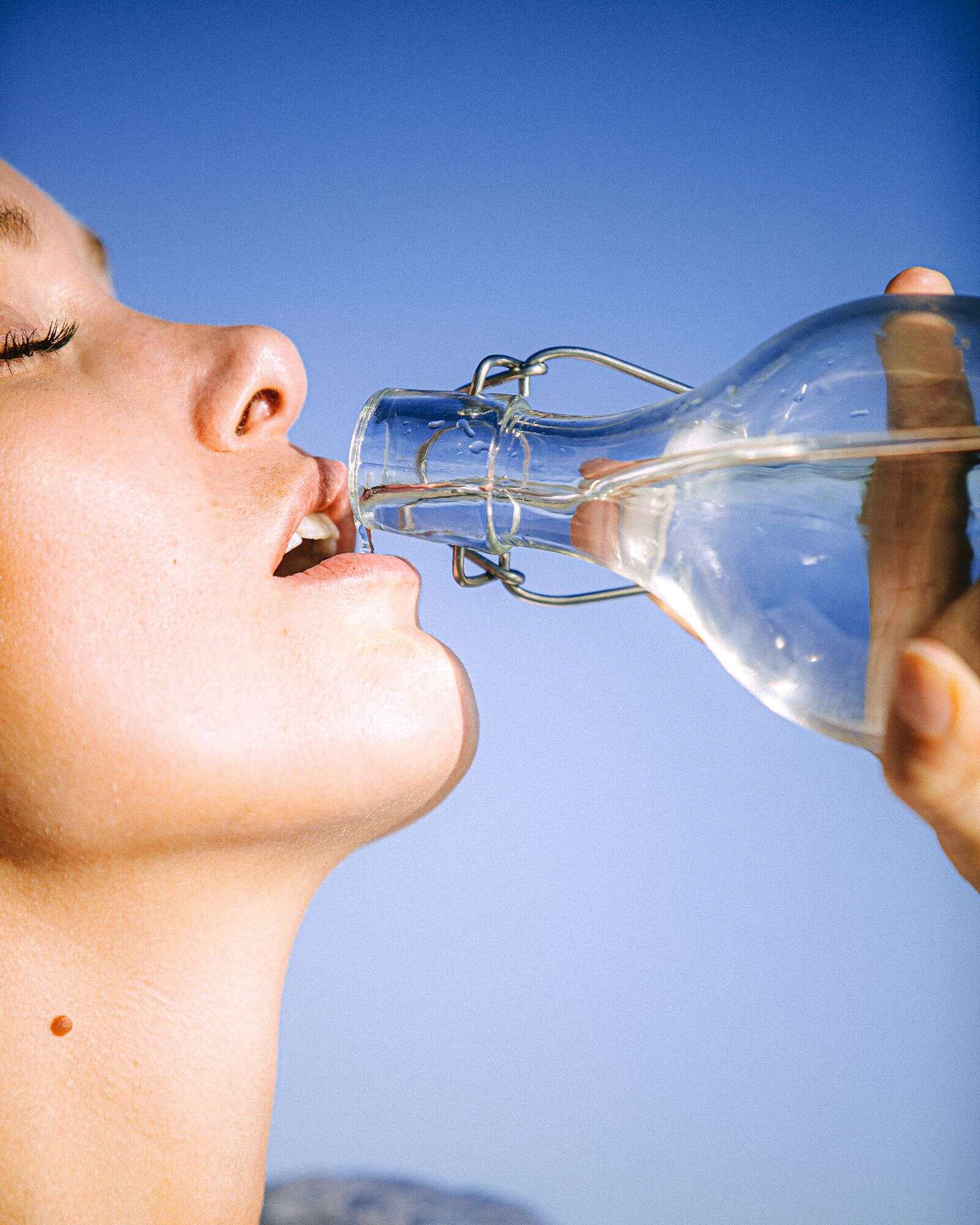
There is no magic number just for breath. But there is a good general target.
According to the Mayo Clinic, the U.S. National Academies of Sciences, Engineering, and Medicine set an adequate daily fluid intake of about 11.5 cups (2.7 liters) for women and about 15.5 cups (3.7 liters) for men. That includes water from food and other drinks, not just plain water.
You need more when it is hot, when you exercise, when you are sick, and when you are pregnant or breastfeeding.
Timing matters more than volume
For breath, how you drink matters as much as how much. A huge bottle at 6pm will not help the breath you had at 10am.
- Drink a glass as soon as you wake up. Your mouth has been dry all night. Rinse and swallow before coffee.
- Sip steadily through the day. Small, frequent sips keep saliva flowing better than a few big gulps.
- Have water with every coffee. One glass of water for every cup is an easy rule.
- Rinse with water after meals. Swish and swallow to clear food bits when you cannot brush.
- Keep water by your bed. If you wake up at night with a dry mouth, take a few sips.
Other saliva helpers can make a real difference too. Cleveland Clinic suggests sugar-free gum or candies with xylitol to boost saliva, and a humidifier for dry air, especially at night.
Try the Oral Probiotic I Recommend →
Why drinking water does not fix bad breath
This is where most people get stuck. They fix their water, their breath improves a little, and then it stalls.
Here is why.
Water fixes the trigger, not the takeover
When your mouth has been dry for weeks or months, the odor-making bacteria do not just visit. They settle in. They build up on the back of your tongue and in the small pockets around your gums, and they crowd out the friendlier bacteria that normally keep them in check.
Drinking more water slows them down. But it does not remove them, and it does not bring the good bacteria back. So the same smelly mix keeps growing back every day.
Mints and mouthwash make it worse
When your breath feels off, it is natural to reach for a mint or a strong mouthwash. But sugary mints feed the odor-makers. And alcohol-based mouthwash dries your mouth even more, which is the exact problem you are trying to solve.
Strong antiseptic rinses also wipe out good and bad bacteria together. The odor-makers tend to grow back first. Our comparison of oral probiotics vs mouthwash explains why that cycle keeps repeating.
What actually makes fresh breath last
Lasting fresh breath needs three things working together:
- Enough saliva to keep rinsing your mouth all day. That is the water part.
- A clean tongue and gumline so there is less for bacteria to feed on. That means brushing, flossing and a tongue scraper. See does tongue scraping help bad breath for how to do it right.
- A healthier mix of bacteria so the odor-makers stop winning. That is the part most people miss, and it is where an oral probiotic comes in.
Best oral probiotic for dry mouth breath
An oral probiotic adds beneficial bacteria directly to your mouth. Unlike a gut probiotic you swallow, it is designed to dissolve slowly so the good strains can settle on your tongue, teeth and gums. Our guide to gut probiotics vs oral probiotics explains why that difference matters.
For dry mouth breath, the goal is simple. While water brings your saliva back, the good bacteria take up the space the odor-makers used to own. Fewer odor-makers means fewer smelly sulfur gases, even on the days you forget to drink enough.
Our deeper guide to oral probiotics for dry mouth covers the research on how the mouth’s bacteria and saliva affect each other.
What to look for
- A chewable or dissolving format. It needs time in your mouth to work. A capsule you swallow skips your mouth completely.
- Named oral strains. Look for strains studied for the mouth, listed clearly on the label.
- No added sugar. Sugar feeds the exact bacteria you are trying to crowd out.
- A clear daily routine. One a day, taken after brushing, is easy to stick with.
- A real guarantee. It takes a few weeks to change your mouth’s bacteria, so you want time to see results.
The oral probiotic I recommend
The oral probiotic I recommend ticks every box on that list. It is a chewable you let dissolve after brushing at night, so the good bacteria have hours to settle in while you sleep. That matters for dehydration breath, because night is when your mouth is driest and the odor-makers grow fastest.
Most people notice their mornings first. The stale, dry-mouth taste fades, and their breath stays fresh longer into the day. If you want to know what to expect week by week, read how long oral probiotics take to work.
You can see exactly which one I use, and why, on our Start Here page.
Get the Probiotic for Dry Mouth Breath →
Your daily dehydration breath plan
Put it all together with this simple routine.
Morning
- Scrape your tongue, back to front, before you eat or drink.
- Brush for two full minutes.
- Drink a full glass of water before your first coffee.
Through the day
- Sip water steadily. Pair every coffee with a glass of water.
- Chew sugar-free xylitol gum after meals.
- Skip sugary mints and alcohol-based mouthwash.
- Drink extra on workout days, hot days and after alcohol.
Night
- Floss and brush.
- Take the oral probiotic and let it dissolve. Do not eat or drink for a little while after.
- Run a humidifier if your room is dry, and keep water by the bed.
Give it two to four weeks. If you want to compare the cost of every option first, our breakdown of what to buy for bad breath lays it all out.
When to see a doctor or dentist
Mild dehydration breath is common and easy to fix. But some signs need a professional.
See your dentist or doctor if:
- Your mouth stays dry most of the time, even when you drink plenty.
- You are always thirsty and urinating a lot. That can be a sign of high blood sugar, covered in diabetes and bad breath.
- Your breath smells fruity or like nail polish remover.
- You have mouth sores, a burning mouth, or trouble chewing and swallowing.
- Your bad breath does not improve after a few weeks of good care.
Get emergency help right away for signs of severe dehydration. The Mayo Clinic lists confusion, fainting, a fast heartbeat, very little or no urine, and being unable to keep fluids down as reasons to seek urgent care. Severe dehydration is a medical emergency, not a breath problem.
Dehydration and bad breath: frequently asked questions
Can dehydration cause bad breath?
Yes. When you are dehydrated, your body makes less saliva. Saliva normally rinses away the bacteria that cause bad breath, so less saliva lets them multiply on your tongue and gums and release smelly sulfur gases.
How do I know if my bad breath is from dehydration?
Look for a sticky or dry mouth, thick saliva, a white coating on your tongue, dry lips and dark yellow urine. Dehydration breath is often worst in the morning, after exercise, after alcohol and on days you drink mostly coffee.
How much water should I drink to stop bad breath?
A common target is about 11.5 cups of total fluids a day for women and 15.5 cups for men, including water from food. For breath, steady sipping through the day matters more than drinking a lot at once.
Why do I still have bad breath when I drink a lot of water?
Water brings back saliva, but it does not remove the odor-causing bacteria that settled in while your mouth was dry. A coated tongue, gum problems or an unbalanced mix of mouth bacteria can keep the smell coming back.
Does dehydration breath go away on its own?
Mild dehydration breath often improves within a day once you rehydrate. If it keeps coming back, the bacteria in your mouth have likely shifted, and you will need a tongue scraper, good brushing and flossing, and support for healthier bacteria.
Can an oral probiotic help dry mouth breath?
An oral probiotic adds beneficial bacteria to your mouth so odor-causing bacteria have less room to grow. Used with good hydration and daily cleaning, it can help breath stay fresh longer, especially overnight when saliva is lowest.
Where to go from here
Dehydration really can cause bad breath. Less water means less saliva, and less saliva lets the odor-makers take over.
So drink steadily, starting the moment you wake up. Cut back on the sugary mints and harsh mouthwash. Clean your tongue every morning.
Then fix the part water cannot reach: the bacteria themselves. If your breath has been off for a while, the odor-makers have already settled in, and they need to be crowded out, not just rinsed.
If your breath still smells even after brushing and flossing, read why your breath smells after brushing and flossing. And to see the oral probiotic I recommend and how to take it, start with our oral probiotic Start Here guide.
Drink up. Clean up. Then keep it fresh.