Disclosure: This article is for general educational purposes and is not medical or dental advice. Some links are affiliate links, meaning we may earn a small commission at no extra cost to you if you choose to make a purchase. We only point readers toward things we genuinely believe can help.

Bad breath after a dental cleaning is not a sign the cleaning failed. If your breath smells weeks after teeth cleaning, the problem is what grew back — not what was removed.
You sat in that chair for forty-five minutes with your jaw aching and your hands folded on your stomach, and you let a stranger scrape every surface of every tooth you own. You paid for it. You drove home running your tongue over teeth that felt like glass, and for the first time in a long time you were not calculating how close you could stand to someone.
That feeling lasted about two weeks.
Then it came back. Not all at once — that is almost the cruellest part. It arrives quietly, a little more each morning, until one day you catch it on your own hand and realise you are exactly where you started. Except now something worse has happened, because you have run out of explanations. You cannot tell yourself you have been slacking. You cannot tell yourself you just need a proper clean. You had the proper clean. A trained professional removed the bacteria from your mouth with instruments, and it came back anyway.
That is the moment most people quietly conclude there is something wrong with them. Something structural. Something that cannot be fixed.
There isn’t. But you have been given an incomplete explanation of what a cleaning does, and that gap is the entire reason this keeps happening to you.
What a cleaning actually removes — and what it leaves behind
A dental cleaning is a removal procedure. That is the whole design of it. Hardened plaque, soft biofilm, stain, the debris packed below the gumline where a brush has never reached — the hygienist takes it off, physically, with steel and ultrasonic vibration and polish.
What a cleaning is not is a sterilisation. Nobody in dentistry claims it is. Your mouth is not an operating theatre and it was never going to leave that room empty.
Within minutes of your appointment ending, a protein layer called the acquired pellicle re-forms across your enamel. Bacteria begin attaching to it almost immediately. Within hours there is a measurable community again. Within days it is organised. This is normal, expected, and happens to every human being who has ever had their teeth cleaned, including people whose breath is fine.
So the question was never did the cleaning remove the bacteria. It did. The question is the one nobody asked you at the desk on your way out:
What grows back?
See What Actually Changes What Grows Back →
Why does bad breath come back after cleaning? The recolonization timeline
Here is why your two good weeks were two weeks and not two days, and not two years.
Immediately after a cleaning, the surfaces of your teeth and the pockets around them are close to a blank slate. Recolonization does not happen all at once — it happens in a sequence, and the sequence has a shape.
The first organisms to settle are largely oxygen-tolerant species. They are not the ones that cause the smell. They attach, they multiply, and as they build up they do something significant: they consume oxygen and create a thicker, denser layer. Underneath that layer, conditions become low-oxygen.
And low-oxygen is exactly the environment the odour-producing bacteria require. These are anaerobes. They break down proteins — from food debris, from shed cells, from mucus — and the by-products are volatile sulphur compounds. Hydrogen sulphide. Methyl mercaptan. The rotten-egg and old-cabbage notes you already know intimately.
So the timeline goes: clean slate, harmless early settlers, thickening layer, oxygen drops, the anaerobes move in and start producing. That staging is why the smell does not return the next morning. It is why it returns on a schedule that feels almost predictable once you notice it — somewhere between the second and sixth week for most people.
You did not fail during those weeks. You watched a biological sequence run its course, on time.
If you want the fuller picture of which compounds produce which odours, we have broken that down in what different bad breath smells mean.
Deep cleaning did not fix bad breath? Why scaling and root planing is not the end of it
The usual next step, when a standard cleaning does not hold, is a deeper one. Scaling and root planing — often split across two appointments, often with local anaesthetic, often several hundred dollars or more.
A deep cleaning goes further than a standard one. It goes below the gumline into the pockets, cleans the root surfaces themselves, and smooths them so there is less for bacteria to grip. If you have pocket depths that are genuinely elevated, it is the right procedure and it is worth having. It is not a scam and this is not an argument against it.
But it is the same category of intervention. It is removal, performed more thoroughly and deeper down. And it is followed by the same thing every removal is followed by: recolonization.
The difference is that the stakes are higher, because deeper pockets are lower in oxygen, which means they favour the anaerobes even more strongly. If your pockets have begun to deepen, you are not just dealing with a smell — you are in the territory covered in our piece on early gum disease, where there is a genuine window before changes stop being reversible.
Deep cleaning buys you a better starting position. It does not decide what fills it.
The trap of booking more cleanings
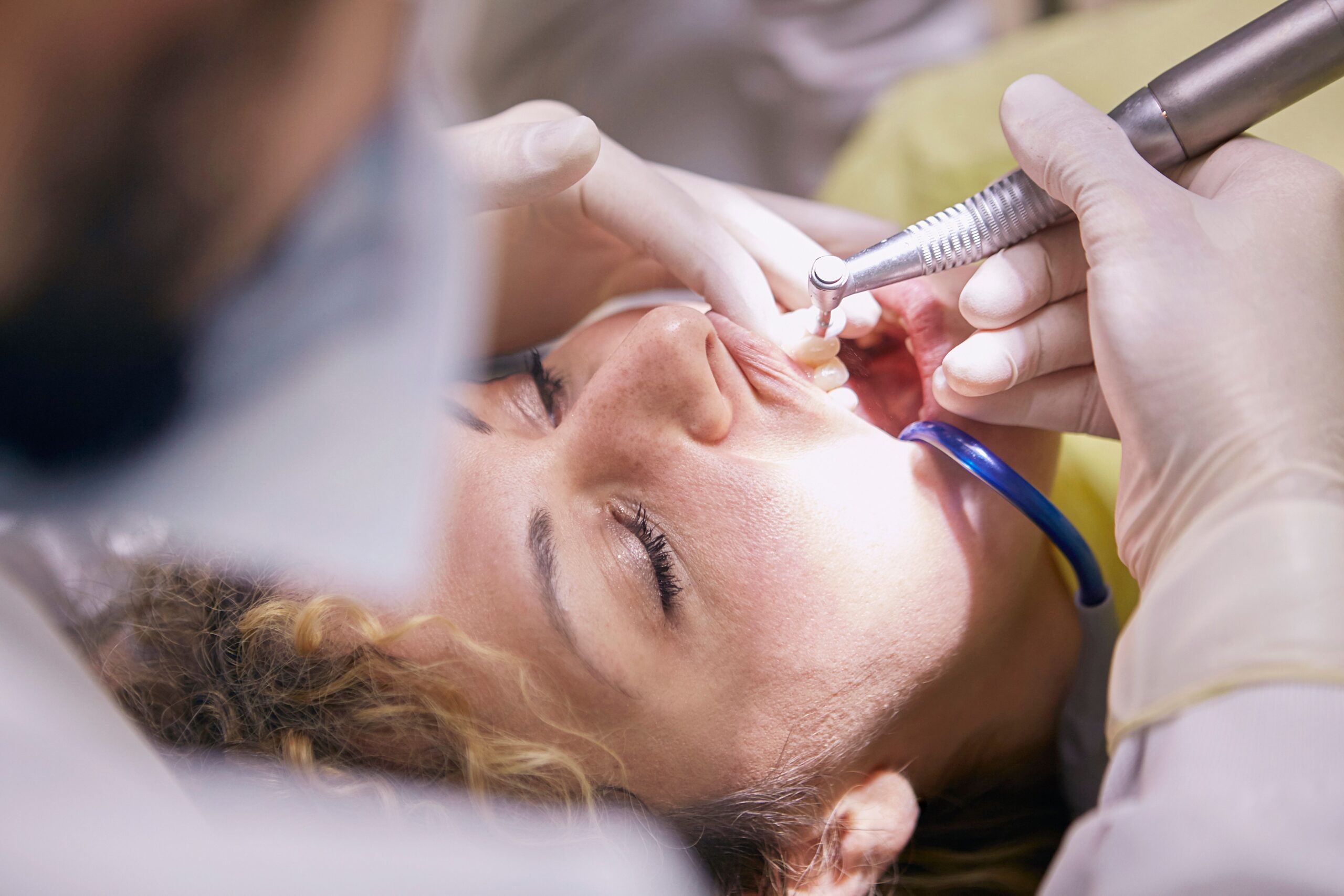
The logical response, when a cleaning helps for a few weeks, is to have cleanings more often. Every three months instead of every six. Some people push for even tighter intervals, paying out of pocket once insurance stops covering it.
This does help. It genuinely does — it keeps resetting the clock before the anaerobes fully establish. Plenty of people run this strategy for years.
But look at what it actually is. You are paying, repeatedly and indefinitely, to keep interrupting a process you are not changing. The gap between appointments is still the gap. You are still living in the second half of every cycle with the same anxiety, the same hand over the mouth, the same half-step back when someone leans in. And you are still, at some level, believing that your mouth is a problem that requires professional management forever.
The strategy has a ceiling, and most people find it. You get to the point where you are going in as often as you reasonably can and the smell still returns before the next visit, and there is nowhere further to escalate.
That is usually when people arrive at a page like this one.
Break the Cycle Between Appointments →
What actually decides what grows back
Two people can leave the same appointment, on the same day, with the same clean mouth, and be in completely different positions six weeks later. One of them is fine. The other is back to checking their breath in the car.
The difference is not effort. It is not enamel quality or bad luck or genetics in any meaningful sense. The difference is what is present in the mouth to compete for the space that just opened up.
An oral microbiome is not a single population. It is hundreds of species in constant competition for surface area, nutrients, and position. Beneficial species and odour-producing species occupy the same real estate and are in direct conflict over it. Beneficial strains take up attachment sites, consume the same nutrients, produce compounds that inhibit their competitors, and help keep local conditions less hospitable to anaerobes.
When that competitive population is healthy, recolonization after a cleaning is dominated by species that do not produce sulphur compounds. The mouth refills, and it refills correctly, and nothing smells.
When that competitive population has been depleted — by years of antiseptic mouthwash, by a course of antibiotics, by chronic dry mouth, by smoking, by the sheer repetition of aggressive cleaning — the space opens up and there is nothing meaningful standing in the way of the anaerobes. They take it. Every time. That is why your cleanings keep failing on schedule while somebody else’s holds for six months.
This reframes the whole problem, and it is worth sitting with for a second. You have been trying to win by removing bacteria. The people whose breath is fine are not winning by removing more than you. They are winning because of what is already living in their mouth doing the work between appointments.
It is the same reason that breath smells after brushing and flossing for so many people who are doing everything correctly. Removal is only half the mechanism, and it is the half everybody already knows about.
Where oral probiotics fit — and where they do not
This is the logic behind oral probiotics: instead of only removing the wrong bacteria, you deliberately reintroduce beneficial strains so they can occupy the space and compete.
The timing matters enormously here, and it is the reason this article exists. The window immediately after a cleaning is the single best opportunity you will ever get. The surfaces are clear. The established anaerobic colonies have just been physically disrupted. The competition for those attachment sites is, for a brief period, wide open.
Introduce beneficial strains into a mouth that has just been cleaned and they are not fighting an entrenched population — they are arriving first. Introduce them into a mouth that has not been cleaned in a year and they are trying to break into territory that is already fully occupied and defended.
Two clarifications, because both mistakes are extremely common.
First, this is not the probiotic in your fridge. Gut probiotics are formulated to survive stomach acid and colonise the intestine — they pass straight through the mouth and do nothing there. The strains that matter for breath are ones that colonise oral tissue specifically. We have laid the difference out fully in gut probiotics vs oral probiotics, and it is the most common reason people conclude probiotics “did not work” for them.
Second, this does not replace your cleanings. Nothing here suggests skipping the dentist. Hardened calculus has to be removed mechanically and no supplement removes it. The point is that a cleaning and an oral probiotic do two different jobs — one clears the ground, the other decides what fills it — and doing only the first is why you keep ending up back here.
See the Oral Probiotic We Recommend →
Your 30-day plan after the next cleaning
If you have a cleaning coming up, or you have just had one, this is how to use the window rather than watch it close.
Days 1–3: start immediately
Begin the oral probiotic the same day as your appointment if you can, or the day after. This is not a detail you can defer by a fortnight — the attachment sites you want are being claimed right now. Take it last thing at night, after brushing, and let it dissolve rather than swallowing it. You want prolonged contact with oral tissue, not a quick trip to your stomach.
Days 1–30: stop the antiseptic rinse
This is the step people resist hardest and it matters more than any other. A strong antibacterial mouthwash does not distinguish between the bacteria causing your smell and the beneficial strains you are actively trying to establish. Using both is spending money to undo your own work every night.
If you want something in the routine, use a plain saltwater rinse or nothing at all. Our daily routine to stop bad breath sets out the full sequence and the order it should run in.
Days 1–30: clean the tongue, gently
The back of the tongue holds a large share of the odour-producing population, and a hygienist does not scrape it. Use a tongue scraper once daily, working back to front, with light pressure. You are lifting the coating, not sanding the surface — aggressive scraping inflames the tissue and gives bacteria more to feed on.
Days 1–30: keep saliva running
Saliva is your natural oxygen delivery and flushing system, and anaerobes thrive when it drops. Water throughout the day, not one large glass in the morning. If you sleep with your mouth open or take medication that dries you out, this becomes the difference-maker rather than a footnote.
Around day 14: expect the old timeline to arrive
The point in the cycle where the smell used to come back is the point where you will be tempted to conclude this has failed too. Colonisation takes time and consistency. If you stop here you will never know whether it was working — and this is the single most common reason people abandon a protocol days before it would have held. We covered the rest of those mistakes in oral probiotics not working.
Day 30: judge it against the right benchmark
The question at the end of the month is not “is my breath perfect.” It is: am I past the point where it always used to return? That is the comparison that tells you whether what grows back has changed.
When you should go back to the dentist sooner
Nothing above is a reason to delay care. Book an appointment rather than working through a plan if you notice bleeding that happens every time you brush, gums that are pulling back from the teeth, a tooth that has started to feel loose or has shifted, persistent pain, or an odour that is genuinely foul rather than stale — a strong metallic or putrid note can point to infection.
Gum recession in particular is worth taking seriously early, because the tissue does not grow back on its own. If that is what you are seeing, read why are my gums receding and get it looked at.
The part that has nothing to do with bacteria
There is a specific damage that comes from having tried the official solution and watched it fail.
Before the cleaning, you had somewhere to put the hope. There was a professional, an appointment, a plan. Afterwards, when it came back, that place was gone — and what filled it was the belief that this is simply how your mouth is. People stop looking at that point. They stop asking, stop reading, and quietly reorganise their life around it instead: sitting a seat further away, keeping conversations short, turning the head slightly, not leaning in for the hug.
Nobody around you knows any of that is happening. That is the isolating part. It looks, from outside, like you are just a little reserved.
It is worth being clear about what you actually have evidence for. You have evidence that removal alone does not hold in your mouth. That is all. It is not evidence that your body is different from everyone else’s, and it is not evidence that nothing will work. It is evidence that you have been solving for the wrong half of the mechanism, using the only half anyone ever told you about.
The two weeks of relief after your last cleaning were not a fluke or a placebo. That was your mouth without an established anaerobic population — which is to say, that was the actual result, and it faded because nothing was holding the ground. Holding it is a different job, and it is one you can do yourself, between appointments, starting the day of the next one.
Frequently asked questions
How long should fresh breath last after a dental cleaning?
For someone with a balanced oral microbiome, the improvement generally holds until the next cleaning. If yours reliably fades within two to six weeks, that is not a poor cleaning — it is a sign that the bacteria recolonising your mouth are dominated by odour-producing anaerobic species rather than beneficial ones.
Why did my bad breath come back after a deep cleaning?
Scaling and root planing removes bacteria from deeper pockets than a standard cleaning, but it is still a removal procedure. Recolonization begins within hours regardless of depth, and deeper pockets are lower in oxygen, which favours the anaerobes that produce volatile sulphur compounds. The procedure improves your starting position without changing what fills it.
Should I ask my dentist for more frequent cleanings?
More frequent cleanings do help, by resetting the cycle before anaerobes fully establish. The limitation is that it manages the problem indefinitely without changing it, and it has a practical ceiling — many people reach the point where the smell returns before the next available appointment.
When is the best time to start an oral probiotic?
The days immediately after a cleaning are the strongest window, because attachment sites on the teeth and gums are clear and established colonies have just been disrupted. Beneficial strains introduced then are competing for open space rather than trying to displace an entrenched population.
Can I use mouthwash alongside an oral probiotic?
An antiseptic mouthwash does not distinguish between harmful and beneficial bacteria, so using one alongside an oral probiotic works against the strains you are trying to establish. If you want a rinse, plain saltwater is a reasonable substitute during the first month.
Does an oral probiotic replace dental cleanings?
No. Hardened calculus can only be removed mechanically, and regular professional cleaning remains necessary. The two do different jobs — the cleaning clears the ground, the probiotic influences what grows back into it.
Where to go from here
If you are weighing this against the mints, rinses and gadgets you have already bought, our breakdown of what to buy for bad breath compares the real cost of each option over a year — most of them manage the symptom, and only one addresses what recolonises your mouth.
And if you want to see the specific oral probiotic we recommend, along with the strains that matter and how to take it, start at our Start Here guide.
Your next cleaning is a window. It closes either way — the only question is what is standing there when it does.