Most people with persistent bad breath are not doing too little. They are doing quite a lot of the wrong things, very diligently, and getting nowhere.
Brushing harder. Rinsing more. Mints in every pocket. Two hours of freshness, then the same stale taste creeping back before lunch. If that is your experience, the issue is not discipline — it is that the routine is aimed at the wrong thing entirely.
This is the full protocol, in order, morning to night. Every step is here for a specific reason, and a few of the most common habits are on the list of things to stop doing today.
Disclosure: This article is reader-supported. If you buy through links on this page, we may earn a commission at no additional cost to you. This never affects the information we share.
🧴 See the Missing Step in Most Routines →
Why Your Current Routine Isn’t Working
Toothpaste cleans surfaces. The bacteria producing the smell are not living on surfaces.
They are anaerobic species — meaning they thrive without oxygen — and they colonise exactly the places a toothbrush cannot reach: the deep crevices at the back of your tongue, the pockets below your gumline, and the crypts of your tonsils. They break down proteins from food and dead cells, and they release volatile sulfur compounds as waste. Those compounds are the odour.
Brushing disturbs those colonies for an hour or two. It does not change which species dominate the environment, so they repopulate on schedule. That is why the smell returns on a predictable timetable no matter how thorough you were, and it is covered in more detail in why your breath smells after brushing and flossing.
So a routine that works has to do three separate jobs: physically remove the bacterial film where it actually lives, avoid creating conditions that help those species thrive, and shift which species hold territory long-term. Most routines only attempt the first, and do it in the wrong place.
The Morning Routine for Fresh Breath, Step by Step
Order matters here more than most people expect.
Drink water before anything else. You have been producing almost no saliva for seven or eight hours, and saliva is your body’s primary defence against odour. Rehydrating first thing does more for your morning breath than anything else on this list. If mornings are your worst time, why morning breath is so bad explains the overnight mechanism.
Scrape your tongue before you brush. Not after. Scraping first removes the bacterial film so your toothpaste is not just spreading it around.
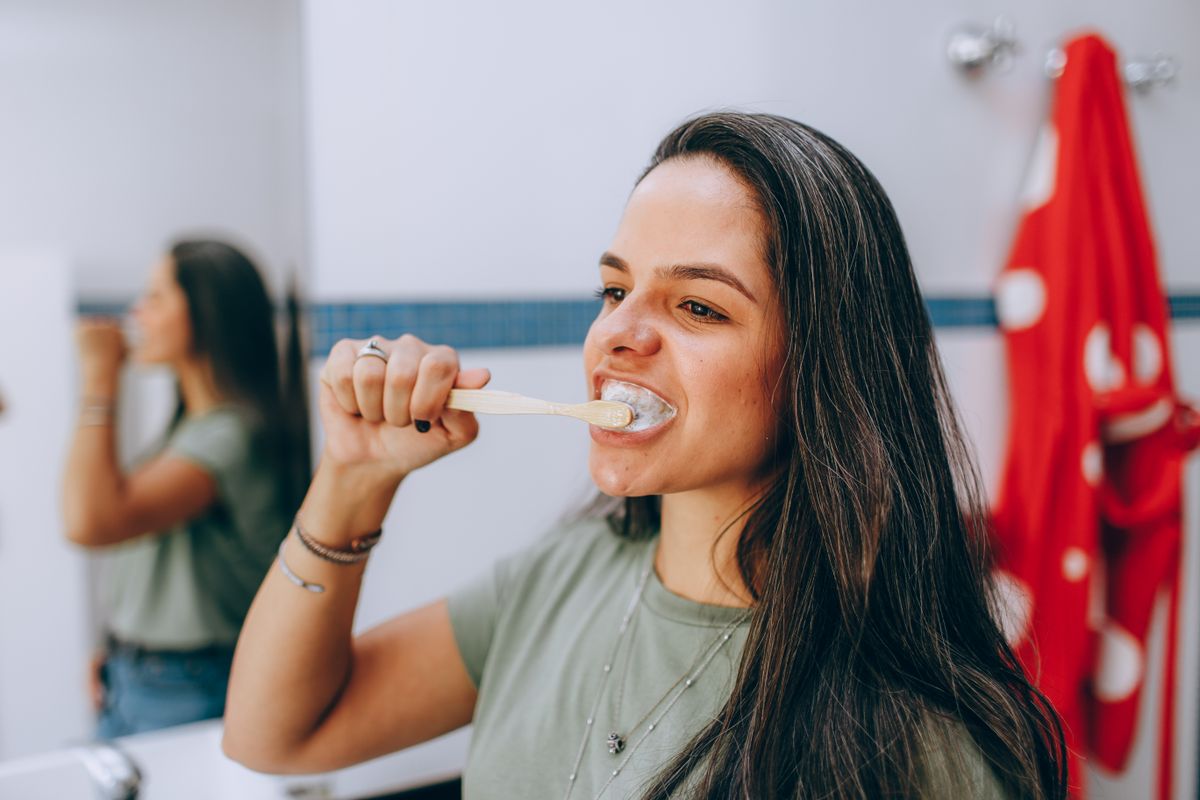
Brush for two minutes, gently. Gently is not a softening of the advice — it is the advice. Aggressive brushing irritates the gumline, irritated gums bleed, and blood in the mouth is a protein source that feeds the exact bacteria producing the odour. You are making the problem worse with effort.
Floss once daily, at whichever time you will actually do it. The between-tooth spaces are low-oxygen environments where anaerobic bacteria concentrate. Skipping this leaves a significant reservoir untouched.
Rinse with plain water, not alcohol mouthwash. More on that below, because it is the single most counterproductive habit in most routines.
How to Clean Your Tongue Properly
If you take one thing from this article, take this. The back third of your tongue holds the largest concentration of odour-producing bacteria in your entire mouth, and almost nobody cleans it correctly.
Use a proper tongue scraper rather than your toothbrush. A brush has bristles designed to agitate a hard surface; a scraper has a flat edge designed to lift a soft film off a soft surface. They are not interchangeable, and the brush mostly redistributes what it picks up.
Stick your tongue out fully. Place the scraper as far back as you can manage without gagging — and expect that point to move further back over a week or two as you adapt. Pull forward in one slow, firm stroke. Rinse the scraper. Repeat four or five times, working across the width of the tongue rather than the same central strip each time.
Do this once daily, in the morning, before brushing. Twice is unnecessary and risks irritating the surface.
You will see what comes off. That coating is the film, and if it is noticeably thick or persistently white, why your tongue is white covers what that indicates. Scraping manages it. It does not change which bacteria keep producing it, which is why this step alone is rarely enough on its own.
✅ Discover the Bacterial Root of the Problem →
How to Keep Breath Fresh All Day
The middle of the day is where most routines fall apart, because people treat it as a masking problem rather than a maintenance one.
Keep water on you and drink it steadily. Every hour your mouth is dry is an hour the bacteria operate without the saliva that normally flushes and neutralises their output. Offices are dehydrating, talking all day is dehydrating, and most people are mildly short of water most of the time.
Rinse with water after eating. Ten seconds of swishing removes the protein debris those bacteria feed on. It costs nothing and does more than a mint.
Handle coffee properly rather than giving it up. Coffee dries the mouth and leaves compounds that feed odour-producing species — but a glass of water alongside it neutralises most of that. The full explanation is in why coffee gives you bad breath.
Choose sugar-free gum over mints. This one surprises people. Sugared mints feed the bacteria you are trying to suppress, so they buy twenty minutes and cost you the afternoon. Sugar-free gum works through a completely different mechanism: chewing stimulates saliva flow, and saliva is the actual defence. Look for xylitol, which bacteria cannot metabolise.
Do not skip meals. Long gaps without eating reduce saliva production and are a common reason breath gets noticeably worse by late afternoon.
The Evening Routine That Matters Most
What you do before bed has more impact than anything else in your day, because you are about to spend eight hours in the ideal conditions for bacterial growth: warm, still, and almost completely dry.
Brush and floss as normal. Then — and this is the step that changes things — take an oral probiotic lozenge, and leave your mouth alone for thirty minutes afterward. No water, no food, no rinsing. The beneficial strains need that window to settle onto the tissue and begin establishing.
Doing this at night is deliberate. Overnight, saliva flow drops and nothing disturbs the mouth for hours, which makes it the best colonisation window you get in a twenty-four hour cycle. Taking the same lozenge at breakfast and then eating, drinking, and talking for the next fourteen hours wastes most of its effect.
If you sleep with your mouth open or wake with a mouth like sandpaper, that is worth addressing separately — oral probiotics and dry mouth covers the connection, and it is a very common reason a good routine still underperforms.
🧬 The Approach That Targets the Source →
What to Stop Doing Immediately
Several standard habits are actively working against you.
Alcohol-based mouthwash. It dries the mouth, and saliva is your strongest natural defence. It also kills indiscriminately — beneficial species die alongside harmful ones, and the harmful ones recolonise faster. You can be measurably worse off four hours later than if you had used nothing at all. The mechanism is laid out in full in oral probiotics versus mouthwash.
Brushing more than twice a day. Past twice, you are irritating gums rather than removing bacteria, and bleeding gums feed the problem.
Sugared mints and sweets. Direct fuel for the species you are trying to displace.
Scrubbing your tongue with a toothbrush. It irritates the surface and mostly redistributes the film rather than lifting it.
Compulsively testing your breath. Once you know, checking every hour produces anxiety and no new information. Confirm it twice, then get on with fixing it — how to tell if you have bad breath covers doing it properly, once.
⚡ Rebalance the Bacteria, Not Just the Symptom →
The Step That Does the Actual Work
Everything above manages the environment. Only one part of the routine changes what lives in it.
Your mouth is an ecosystem, and ecosystems are settled by which species hold territory. Cleaning reduces the population temporarily; it does not change the balance. That is why a meticulous routine can plateau at “better but not fixed” and stay there for years.
Oral probiotics work by competition rather than cleaning. Beneficial strains — Streptococcus salivarius K12 and M18 principally — colonise the same tissue the odour-producing species occupy and compete with them directly for space and nutrients. K12 produces bacteriocins, natural antimicrobial compounds that specifically suppress sulfur-producing bacteria. M18 breaks down the biofilm those colonies shelter inside. The research is covered in whether oral probiotics actually work.
One thing to get right: a standard gut probiotic will do nothing here. Those strains are engineered to survive stomach acid and colonise your intestines, and they pass through your mouth in seconds. The strain printed on the label matters more than anything else on the package, which our guide to the best probiotics for oral health explains in detail.
And if you have been at this for years with a good routine, what you have is chronic bad breath with a bacterial cause rather than a hygiene failure. The distinction matters, because it tells you which step to prioritise.
How Long Before Any of This Works
Be realistic, because unrealistic expectations are the main reason people abandon a routine that was working.
The hydration and tongue-scraping changes produce a noticeable difference within days. That is the quick win, and it is genuine — but it is management rather than resolution, and it will plateau.
The bacterial shift takes four to eight weeks of daily consistency. You are changing which species hold territory in a living ecosystem, not wiping a surface, and that timeline does not compress no matter how motivated you are. Our week-by-week guide to how long oral probiotics take to work sets out what to expect and when.
The most common failure is stopping at week three because nothing dramatic has happened. Week three is roughly where the groundwork is laid and before the result shows. Mark your start date somewhere so you can measure against it rather than against a feeling.
Frequently Asked Questions About a Daily Routine to Stop Bad Breath
What is the best oral hygiene routine for bad breath?
Water on waking, tongue scrape, gentle two-minute brush, floss once daily, and plain water rinses rather than alcohol mouthwash. Then an oral probiotic at night with a thirty-minute gap before eating or drinking. The cleaning steps manage the environment; the probiotic is the only part that changes which bacteria dominate it.
Should I scrape my tongue before or after brushing?
Before. Scraping first lifts the bacterial film off, so your toothpaste is working on a clean surface rather than spreading the film around. Once daily is sufficient, and a proper scraper works considerably better than a toothbrush.
Is mouthwash bad for bad breath?
Alcohol-based mouthwash generally makes things worse over a full day. It dries the mouth, and saliva is your main natural defence, and it kills beneficial bacteria alongside harmful ones — which tend to recolonise faster. If you want a rinse, plain water or a salt-water rinse does more good.
How can I keep my breath fresh all day at work?
Water steadily rather than in occasional large amounts, a ten-second water rinse after eating, sugar-free gum with xylitol instead of mints, and a glass of water alongside coffee rather than after it. Sugared mints feed the bacteria and cost you more than they buy.
How long does it take for a new routine to fix bad breath?
The hydration and scraping changes show within days. The underlying bacterial shift takes four to eight weeks of daily consistency. Most people who give up do so around week three, which is before the result typically appears.
Do I still need to see a dentist if I follow this routine?
Yes. Persistent bad breath can also indicate gum disease, decay, or an infection that no routine will resolve, and those need professional attention. Book the appointment alongside starting the routine rather than instead of it.
If you want the full picture of how oral bacteria affect your breath, gums, and confidence, start with our Start Here guide to oral probiotics.