Disclosure: This article is for general educational purposes and is not medical or dental advice. Some links are affiliate links, meaning we may earn a small commission at no extra cost to you if you choose to make a purchase. We only point readers toward things we genuinely believe can help. Talk to your dentist about any ongoing symptoms.

Crooked teeth do not smell on their own. But crowded, overlapping teeth create tight spots your brush and floss cannot reach, and odor-causing bacteria love those spots. Here is why crowded teeth can lead to bad breath, how to clean them properly, and how to stop the smell without braces.
You brush twice a day. You floss most nights. But there is that one spot.
Maybe it is the lower front teeth that overlap. Maybe it is the tooth that sits a little behind the others. The floss shreds there. Or it snaps through too fast. Or it comes out smelling awful.
And you start to wonder if your crooked teeth are the reason your breath never feels fresh.
You are not imagining it. But the fix is not as expensive as you might think.
Can crooked teeth cause bad breath?
Indirectly, yes. The teeth themselves are not the problem. What builds up around them is.
Bad breath mostly comes from bacteria in your mouth. They feed on food bits, dead cells and plaque, and release smelly sulfur gases as they eat. The Mayo Clinic lists poor cleaning between the teeth, plaque and gum disease among the most common causes of bad breath.
Crooked and crowded teeth make that cleaning harder. Dental researchers note that while plaque, not crooked teeth, is the real starting point for gum disease, crowded teeth are difficult to clean and can act as spots where plaque builds up.
What the research actually says
Here is the honest part. In a classic clinical study published in the Journal of Clinical Periodontology, researchers compared crowded and non-crowded teeth. When people stopped cleaning between their teeth, plaque and gum inflammation rose in both groups in a similar way.
That tells you something important. Crooked teeth are not doomed to smell. The real issue is whether you can actually clean them. Most people with crowding are using tools and techniques made for straight teeth, so the tight spots get skipped every day.
Why the smell gets worse over time
When plaque sits in the same tight gap for days, it irritates the gum next to it. Your gums get puffy and bleed. Small pockets form. Those pockets are low in oxygen, which is exactly where the worst odor-making bacteria grow.
So a cleaning problem slowly becomes a gum problem, and a gum problem becomes a breath problem. If your gums already bleed in crowded areas, read why your gums bleed when you brush.
See the Oral Probiotic I Recommend →
Why do crowded teeth smell bad?
Crowded teeth create four kinds of hiding spots for bacteria.
- Tight contacts. When two teeth press hard together, floss struggles to get through. Plaque stays wedged in the gap.
- Overlaps. When one tooth sits partly in front of another, the hidden surface behind it never sees your brush.
- Rotated teeth. A twisted tooth has odd angles and corners where food packs in.
- Tooth “steps”. A tooth pushed in or out of line creates a ledge at the gumline that traps plaque.
Food and plaque that sit in these spots break down over the day. That is why many people with crowding notice their floss smells bad in one specific area. Our guide to why your floss smells bad explains what that smell is telling you.
Signs your crowded teeth are behind your bad breath
- Your floss smells or looks dirty in the same one or two gaps every time.
- Floss shreds, catches or snaps in certain spots.
- Your gums bleed or look red around overlapping teeth.
- Food gets stuck in the same place after most meals.
- You notice a bad taste that comes back a few hours after brushing.
- Your dentist or hygienist mentions tartar in the same areas at every visit.
Two or more of these is a strong clue that crowding is part of your breath problem.
Fix the Bacteria Hiding Between Your Teeth →
How to clean crooked teeth properly
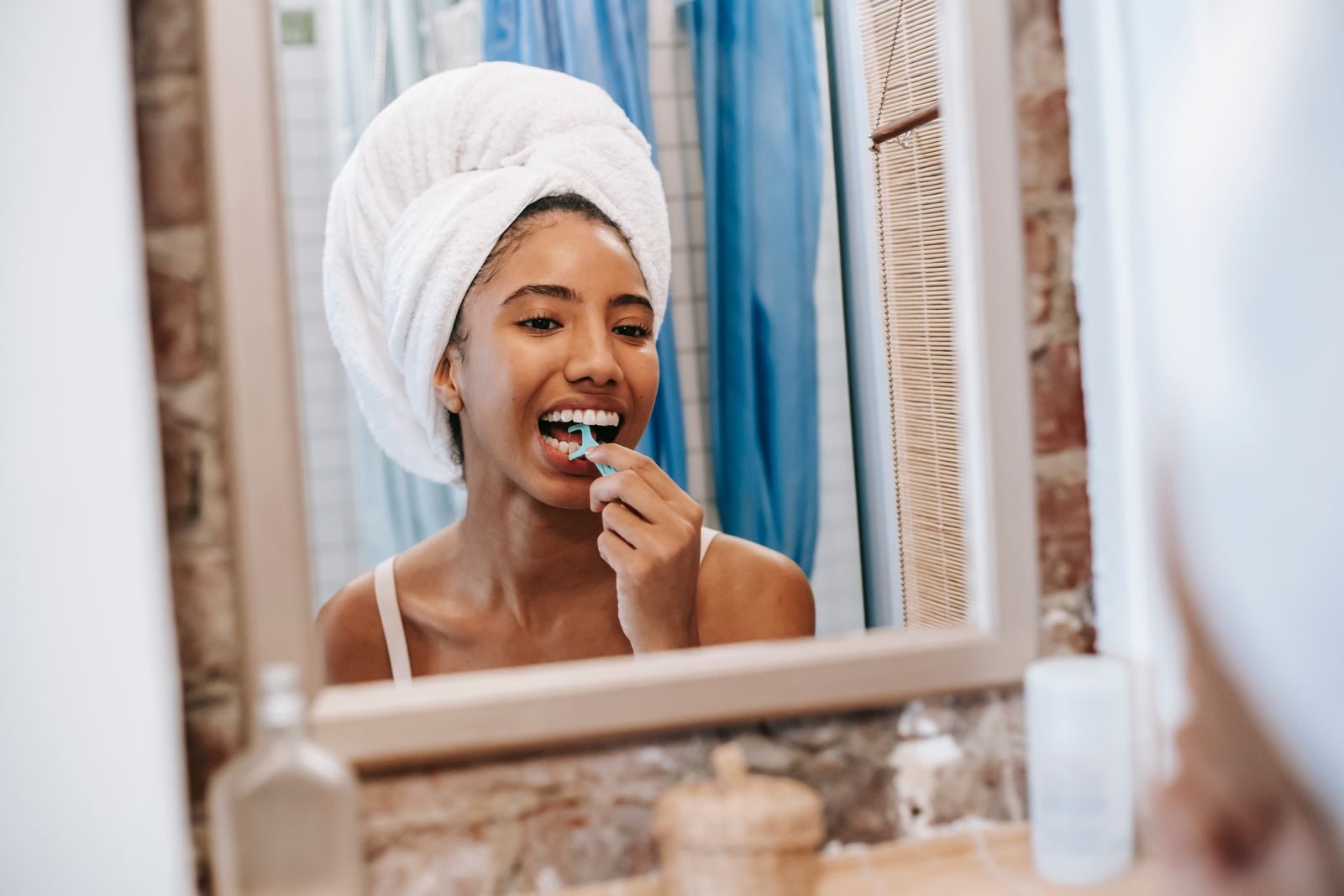
You do not need perfect teeth to have fresh breath. You need a routine built for the teeth you actually have.
1. Brush each crowded tooth on its own
Do not sweep across crowded areas in big strokes. Tilt your brush up and down, and use the tip of the brush to reach behind overlapping teeth. Angle the bristles about 45 degrees toward the gumline, and spend a few extra seconds on every crowded spot.
A small brush head helps. So does an electric brush with a small round head, since it can sit on one tooth at a time. Keep your brush fresh too. Our guide on whether your toothbrush is causing bad breath covers how to clean and store it.
2. Clean between every gap, every day
The American Dental Association says cleaning between your teeth helps remove plaque from the hard-to-reach surfaces where two teeth meet, and recommends doing it once a day. With crowded teeth, this step matters more than anything else.
3. Clean your tongue
Even if crowding is part of the problem, the back of your tongue is still the biggest source of odor for most people. A tongue scraper takes 30 seconds. See does tongue scraping help bad breath for the right technique.
4. Keep your mouth from drying out
Saliva rinses those tight gaps all day long. When your mouth is dry, food and bacteria sit longer. Our guide on whether dehydration can cause bad breath explains how to keep saliva flowing.
Try the Oral Probiotic for Crowded Teeth →
Best floss for tight crowded teeth
There is no single best tool for everyone. The ADA says the choice should depend on your mouth. It notes that dental floss may suit people with tight spaces, while small interdental brushes suit wider gaps.
Here is how to match the tool to the gap.
- Very tight contacts: thin waxed floss or floss tape. It slides through tight spots without shredding. If unwaxed floss keeps tearing, switch.
- Overlaps and awkward angles: floss picks or a floss holder. They let you angle into spots your fingers cannot reach.
- Small gaps: soft rubber picks. A dental expert at the University of Colorado says soft picks can fit nicely between teeth with tighter contacts.
- Wider gaps and pockets: interdental brushes. Start with the smallest size. ADA experts warn that forcing the wrong size between teeth can damage your gums.
- Hard-to-reach spots: a water flosser. It is a helpful extra for rotated teeth and food traps, but most dentists still want you to clean the tight contacts with floss too.
The most important rule: use the “C” shape. Wrap the floss around each tooth like the letter C and slide it gently under the gumline, then do the same on the tooth next to it. Many people with crowding pop the floss in and out of the gap and miss both sides.
Bleeding usually settles within a week or two once you clean a spot every day. If it does not, get it checked.
Do you need braces to fix crooked teeth bad breath?
Not usually. Straightening teeth can make them easier to clean, and for some people it is worth it for other reasons too. But braces and aligners create their own cleaning challenges while you wear them. Our guide to bad breath from braces and aligners covers that.
For most people, the faster and cheaper fix is a better routine plus a healthier mix of mouth bacteria. Because even with a perfect routine, you will never reach 100% of a crowded mouth. Some bacteria will always be left behind in the tightest spots. What matters is which bacteria those are.
Oral probiotic for crooked teeth breath
This is the step most people with crowded teeth never hear about.
Floss and brushes remove bacteria. But they cannot reach every surface in a crowded mouth, and the bacteria grow back within hours. If the mix of bacteria growing back is mostly odor-makers, the smell returns no matter how hard you scrub.
An oral probiotic works on that second part. It adds beneficial bacteria directly to your mouth, so they can settle on your teeth, gums and tongue, including the spots your floss misses. The more space the friendly bacteria take up, the less room the odor-makers have to grow back.
It is not a replacement for brushing and flossing. It is what makes your cleaning hold longer.
What to look for
- A chewable or dissolving format, so it spends time in your mouth instead of being swallowed straight away.
- Strains chosen for the mouth, not the gut. Our guide to gut probiotics vs oral probiotics explains why that matters.
- No added sugar, which would feed the very bacteria you want to crowd out.
- A simple once-a-day routine you can stick with.
- A money-back guarantee, because changing your mouth’s bacteria takes a few weeks.
The oral probiotic I recommend
The oral probiotic I recommend checks every box. You chew it after brushing and flossing at night and let it dissolve, so the good bacteria have all night to settle into the gaps you just cleaned. That timing matters with crowded teeth, because night is when saliva drops and trapped bacteria grow fastest.
Most people notice their morning breath first. Then the “same spot” smell on the floss starts to fade. To know what to expect week by week, read how long oral probiotics take to work.
You can see exactly which one I use, and why, on our Start Here page.
Get Fresher Breath With Crooked Teeth →
Your crooked teeth fresh breath routine
Morning
- Scrape your tongue, back to front.
- Brush for two full minutes, tooth by tooth in crowded areas.
- Drink a glass of water.
After meals
- Rinse with water to clear the food traps.
- Chew sugar-free gum if you cannot brush.
Night
- Floss or pick every gap with the right tool for each one.
- Brush again, angling into the gumline.
- Spit, do not rinse.
- Chew the oral probiotic and let it dissolve. Nothing to eat or drink after.
Give it three to four weeks. If you want to compare costs first, see our breakdown of what to buy for bad breath.
When to see a dentist
Crowding is common and usually manageable at home. But book a dental visit if you notice:
- Gums that keep bleeding after two weeks of daily cleaning.
- Gums pulling back from crowded teeth, or teeth that feel loose.
- Pain, swelling, or pus around a tooth.
- A dark spot or hole between crowded teeth. Decay hides there easily, as covered in oral probiotics for cavities.
- Bad breath that does not improve after a month of good care.
Get urgent care right away if you have facial swelling, a fever with tooth pain, or trouble swallowing or breathing. Those can be signs of a spreading infection and need same-day treatment.
If gum problems are already starting, our guide to the early gum disease window explains which stage is still reversible.
Crooked teeth and bad breath: frequently asked questions
Can crooked teeth cause bad breath?
Indirectly, yes. Crooked and crowded teeth create tight spots that are hard to brush and floss, so plaque and food stay behind. The bacteria feeding on them release smelly sulfur gases, and trapped plaque can also lead to gum problems that make breath worse.
Why do my crowded teeth smell when I floss?
Plaque and food that sit in a tight gap for a day or more break down and release odor. A smell in the same spot each time usually means that gap is not getting cleaned well, or that the gum next to it is irritated.
What is the best floss for crowded teeth?
Thin waxed floss or floss tape usually works best for very tight contacts because it slides through without shredding. Floss picks help with awkward angles, soft rubber picks suit small gaps, and the smallest interdental brushes suit wider gaps.
Do I need braces to fix bad breath from crooked teeth?
Usually not. A better brushing and flossing routine, tongue cleaning and a healthier mix of mouth bacteria fix most cases. Straightening teeth can make cleaning easier, but it is not the only way to fresh breath.
Is a water flosser enough for crooked teeth?
A water flosser is a helpful extra for food traps and rotated teeth, but it may not fully clean very tight contacts. Most people with crowding do best using floss or picks plus a water flosser.
Can an oral probiotic help with crooked teeth breath?
It can help. An oral probiotic adds beneficial bacteria to your mouth so odor-causing bacteria have less room to grow back in the spots floss and brushes miss. It works best alongside daily brushing, flossing and tongue cleaning.
Where to go from here
Crooked teeth do not doom you to bad breath. They just give bacteria more places to hide.
Clean each crowded tooth on its own. Pick the right tool for every gap and use the “C” shape. Scrape your tongue. Keep your mouth hydrated.
Then handle the part no floss can reach: the bacteria that grow back in the tightest spots. Change which bacteria live there, and the smell has nowhere left to come from.
If your breath still smells even after a solid routine, read why your breath smells after brushing and flossing. And to see the oral probiotic I recommend and how to take it, start with our oral probiotic Start Here guide.
Your teeth do not have to be straight. Your breath can still be fresh.